

Maintaining Sailboat Blocks and Lines: A Complete Guide

Table of Contents
- Why Maintaining Sailboat Blocks and Lines Matters
- Best Marine Hardware for Saltwater Environments
- Freshwater Rinsing and Initial Cleaning Procedures
- Lubrication Techniques for Sheaves and Moving Parts
- When to Replace Sailboat Blocks: Signs of Wear and Tear
- Preventative Maintenance Schedules and Line Friction Management
- Troubleshooting Seized Sheaves and Common Problems
- Frequently Asked Questions
Last Updated: August 31, 2026
Why Maintaining Sailboat Blocks and Lines Matters
A seized sheave, weakened halyard, or corroded ball bearings can turn a routine sail into a safety incident. Saltwater environments accelerate deterioration faster than most boat owners realize, and preventative care costs far less than emergency replacements. The rigging system works harder than almost any other component, with blocks redirecting forces under constant tension and lines absorbing UV exposure, salt spray, and repeated friction. Without regular maintenance, you're waiting for failure rather than preventing it.
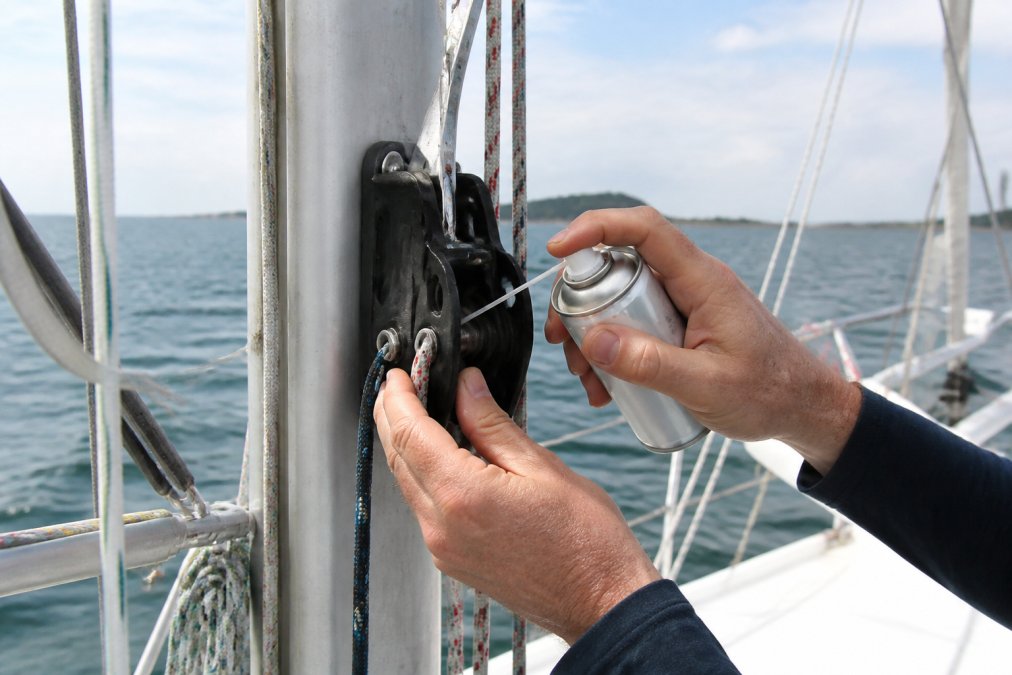
This guide from Charleston Yachting covers essential practices for keeping your blocks and lines in peak condition. Whether you're managing a weekend cruiser or a racing boat, the principles remain the same: regular freshwater rinsing, proper lubrication, early detection of wear, and strategic replacement before catastrophic failure occurs.
Best Marine Hardware for Saltwater Environments
Stainless steel remains the gold standard for marine hardware in saltwater settings, resisting corrosion significantly better than standard steel, though it still requires regular rinsing to prevent salt crystal buildup (nist.gov). Composite materials like reinforced nylon and engineered polymers offer excellent durability while reducing weight, resisting corrosion entirely but degrading under prolonged UV exposure without proper protection.
Sealed ball bearing systems keep salt crystals and moisture out far more effectively than open designs, though they cost more upfront. Blocks with stainless steel snap shackles or bail attachments are easier to maintain and replace than those permanently riveted to your deck. This flexibility lets you rotate blocks for maintenance without dismantling your entire rigging system.
Charleston Yachting stocks premium blocks from Harken and other leading manufacturers specifically engineered for saltwater use. Quality hardware costs more initially but eliminates the constant cycle of replacement and repair that cheaper alternatives demand.
Freshwater Rinsing and Initial Cleaning Procedures
Freshwater rinsing is the single most effective maintenance step you can take. Salt crystals accumulate on every exposed surface and accelerate corrosion and friction. After sailing in saltwater, rinse your entire rigging system with freshwater as soon as practical using a gentle flow rather than high pressure, which can force salt deeper into bearing assemblies.
For heavily encrusted blocks, prepare a solution of freshwater and mild dish soap. Submerge the block for 15-20 minutes to soften salt deposits, then use a soft brush to gently agitate and remove the crystals. Never use high-pressure washers, which can damage sheave boxes, drive salt deeper into sealed bearing assemblies, and weaken line fibers (uscg.gov).
After rinsing, allow blocks to air dry completely before applying any lubricant. Moisture trapped under lubricant creates an environment where corrosion accelerates.
Removing Salt Crystals from Ball Bearings
Ball bearings inside sheaves are particularly susceptible to salt crystal damage because crystals can jam the bearing mechanism and prevent smooth rotation. If a block doesn't spin freely, salt crystal accumulation is often the culprit.
For sealed bearing blocks, freshwater rinsing usually resolves the issue. Submerge the block in a dish soap and freshwater solution, then gently rotate the sheave by hand while it soaks. If the bearing remains stiff after rinsing and drying, the block likely needs replacement rather than further cleaning.
For older blocks with open bearing designs, apply a small amount of penetrating oil after freshwater rinsing. Let it soak for 30 minutes, then gently work the sheave back and forth to distribute the oil through the bearing. Wipe away excess oil with a clean cloth before storing or using the block.
Cleaning Halyard Sheaves and Sheave Boxes
Halyard sheaves experience some of the highest loads in your rigging system. Start by rinsing the entire sheave box assembly with freshwater, using a soft brush to gently clean around edges where salt crystals accumulate and accelerate corrosion.
For the sheave itself, inspect the groove where your halyard runs. Salt crystals and line fibers can accumulate here, creating friction that makes hoisting difficult. Use a soft brush to gently clean the sheave groove, then rinse thoroughly with freshwater.
If your halyard is difficult to hoist or makes grinding sounds, submerge the entire block in a freshwater and dish soap solution for 20-30 minutes, then rinse thoroughly and air dry completely. Check the halyard itself for fraying, discoloration, or areas where the line has become stiff or brittle, indicating replacement is needed.
Lubrication Techniques for Sheaves and Moving Parts
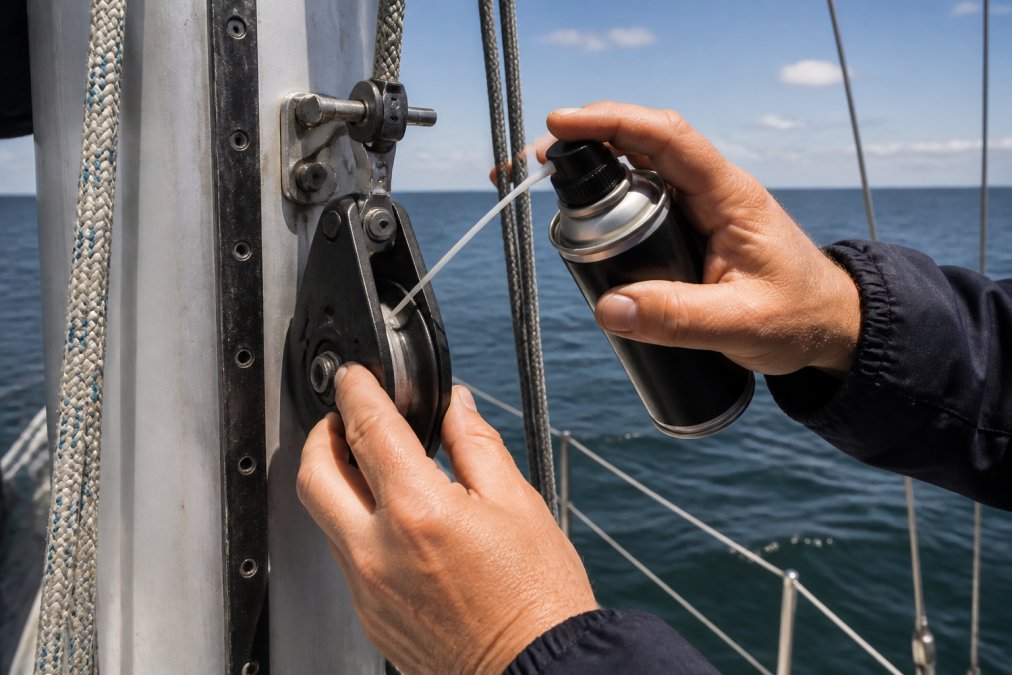
Dry film lubricants are the preferred choice for sailboat blocks in saltwater environments (sname.org). These lubricants contain solid lubricating particles suspended in a volatile carrier that evaporates, leaving behind a protective dry coating without trapping moisture or salt water.
Apply dry film lubricant sparingly to ball bearings and sheave boxes after freshwater rinsing and complete air drying. A light mist is all you need; excess lubricant collects salt and debris. For snap shackles and other moving attachment hardware, apply a small amount to pivot points and locking mechanisms, then work the shackle open and closed several times to distribute evenly.
Boats used weekly in saltwater should be re-lubricated monthly during the sailing season. Seasonal cruisers can extend this to every 2-3 months. Always re-lubricate after any extended freshwater rinsing procedure. Never mix lubricant types; clean away heavy oil-based lubricants completely before switching to dry film products.
When to Replace Sailboat Blocks: Signs of Wear and Tear
Visual inspection reveals many wear indicators. Look for cracks or permanent deformation in the block body, which means load capacity has been compromised. Check the sheave groove for deep wear patterns; if noticeably shallower than originally, the sheave no longer provides proper line support.
Listen to your blocks while sailing. A grinding or squealing sound indicates salt crystal accumulation or bearing damage. If freshwater rinsing and proper lubrication don't eliminate the noise, the bearing assembly needs replacement.
Feel the resistance when manually rotating a block's sheave. It should spin freely with minimal effort. If stiff or sticky even after cleaning and lubrication, the ball bearing is likely damaged and the block should be replaced.
Check your lines for unusual wear patterns. If a line shows rapid fraying in specific locations, the corresponding block's sheave may be damaged or misaligned. The working load capacity of your blocks should match the breaking strength of your lines and maximum loads your rigging system encounters.
| Wear Indicator | Action Required | Replacement Urgency |
|---|---|---|
| Grinding or squealing noise | Clean and lubricate; test after drying | Urgent if noise persists |
| Stiff or sticky sheave rotation | Replace bearing or entire block | High (within one season) |
| Visible cracks in block body | Replace immediately | Critical (safety risk) |
| Deep wear groove in sheave | Replace sheave or entire block | High (within one season) |
| Line fraying at specific block | Inspect block alignment; replace if damaged | High (line damage accelerates) |
| Undersized for current loads | Upgrade to larger block | Medium (plan for next service) |
Preventative Maintenance Schedules and Line Friction Management
For boats used weekly in saltwater, conduct a complete freshwater rinse of your rigging system every two weeks. Monthly, inspect each block for signs of wear, test sheave rotation, and apply dry film lubricant to moving parts.
Seasonal cruisers should rinse their entire rigging system with freshwater immediately after returning from saltwater, then store the boat with blocks and lines protected from UV exposure. Before the next season begins, inspect all hardware, test block function, and re-lubricate as needed.
Rotate your halyards periodically if your boat has multiple halyards for the same purpose. This distributes wear evenly and extends their useful life. Inspect the direction of pull through each block; blocks that are misaligned create unnecessary friction and accelerate wear on both the block and your line.
Troubleshooting Seized Sheaves and Common Problems
Salt crystal accumulation is the most common cause of seized sheaves. Submerge the block in a freshwater and dish soap solution for 20-30 minutes, then gently work the sheave back and forth while it soaks. After rinsing thoroughly and air drying completely, the sheave should rotate freely.
If freshwater rinsing doesn't free a seized sheave, the ball bearing is likely damaged. Attempting to force the sheave to rotate can cause additional damage. Replacement is more practical than repair, as damaged bearings can fail suddenly under load.
Line friction problems often stem from block misalignment rather than block damage. If a halyard or sheet requires excessive force to move, inspect the block's position relative to the line's path. A block that's slightly off-center creates friction that makes the line difficult to move.
Snap shackles that are difficult to open or close usually need cleaning and lubrication rather than replacement. Freshwater rinsing followed by application of dry film lubricant to the pivot points restores smooth operation in most cases.
If blocks are making unusual noises but the sheave rotates freely, the noise may come from the block moving within its attachment hardware. Tighten any fasteners connecting the block to your deck layout or mast.
Maintaining your sailboat's blocks and lines requires consistent attention, but the effort pays dividends in safety and performance. Charleston Yachting stocks the premium replacement blocks and rigging hardware you'll need when maintenance alone isn't enough. Our curated inventory includes Harken blocks engineered for saltwater durability, plus the dry film lubricants and freshwater-compatible cleaning supplies that extend the life of your existing hardware. With same-day shipping, you can order replacement components and have them ready for installation before your next sail. Shop our complete selection of marine rigging hardware and keep your boat's running rigging in top condition.
Frequently Asked Questions
How often should you clean sailboat blocks?
Clean your blocks every 2-4 weeks during active sailing season, or immediately after sailing in salt water. If you notice salt crystal buildup on ball bearings or visible corrosion on the sheave box, clean sooner. After winter storage or extended saltwater use, a thorough freshwater rinse and inspection is essential to prevent seized bearings and maintain smooth line movement through your rigging system.
What is the best way to clean sailboat lines?
Use a soft brush with a diluted dish soap solution and freshwater. Scrub the line gently to remove salt crystals and debris, working from one end to the other. Rinse thoroughly with clean freshwater to remove all soap residue. For stubborn salt buildup, soak the line in freshwater for 15-20 minutes before brushing. Allow lines to air dry completely before storing or using them in your running rigging system.
When to replace sailboat blocks: what are the warning signs?
Replace blocks when you notice cracked or damaged sheaves, excessive rope chafe, seized ball bearings that won't turn freely, or corrosion that affects load capacity. If a block shows signs of wear affecting the direction of pull or working load performance, replacement is necessary for safety. Blocks from quality brands like Harken maintain their integrity longer when maintained properly, but age and heavy use eventually require replacement to ensure your halyard and running rigging perform reliably.
Should you lubricate sailboat blocks?
Yes, use a dry film lubricant designed for marine hardware rather than oil-based products that attract salt and dirt. Apply lubricant to sheaves and ball bearings every 3-6 months or after freshwater rinsing. Dry film lubricant reduces friction without creating buildup, protecting your blocks from corrosion while maintaining smooth operation. Avoid over-lubrication, which can trap salt crystals and cause more damage than it prevents.
This article was written using GrandRanker