

BOE Marine Alternatives for Weekend Sailors

Table of Contents
- Why Weekend Sailors Look Beyond BOE Marine
- Marine Electronics Return Policy Explained
- Top Marine Electronics Alternatives for Daysailers
- Budget-Friendly vs. Marine-Grade Equipment
- Price Matching Marine Gear Across Retailers
- Weekend Sailor Gear Essentials Without the Premium Price
- DIY Installation vs. Professional Outfitting Services
- Conclusion
Last Updated: August 18, 2026
Why Weekend Sailors Look Beyond BOE Marine
When outfitting a weekend sailboat, marine electronics decisions affect safety, navigation reliability, and enjoyment on the water. BOE Marine alternatives exist because weekend sailors operate under different constraints than professional crews: boats sit idle most weeks, budgets are tight, and gear must be dependable without requiring technician configuration.
At Charleston Yachting, we work with sailors upgrading outdated systems, replacing failed electronics, or outfitting new-to-them boats. They discover the market offers legitimate alternatives, some cheaper, some better-suited to small craft, some offering features that matter more for daysailing. Understanding those options means making smarter purchases and actually using the gear you buy.
Below, we'll walk through marine electronics alternatives that work best for weekend sailors, show where you can save money without sacrificing safety, and explain how to navigate return policies and price matching across retailers.
Marine Electronics Return Policy Explained
A return policy matters because marine electronics are expensive, integration can go wrong, and sometimes what looks perfect on paper doesn't work with your existing setup.
Most marine retailers allow returns within 30 days for items in original, unused condition with all accessories. Many charge restocking fees of 15-20% if you've opened packaging or powered on the unit. Water-damaged equipment or anything showing signs of installation is rarely returnable.
Federal Trade Commission guidelines on consumer returns establish baseline standards, but marine retailers often set stricter requirements due to technical complexity. Check the specific policy before checkout. Some retailers offer extended return windows during spring sailing season.
Top Marine Electronics Alternatives for Daysailers
The marine electronics market has fragmented significantly. You're no longer forced into an all-or-nothing choice between expensive integrated systems and bare-bones equipment. Solid alternatives exist at multiple price points.
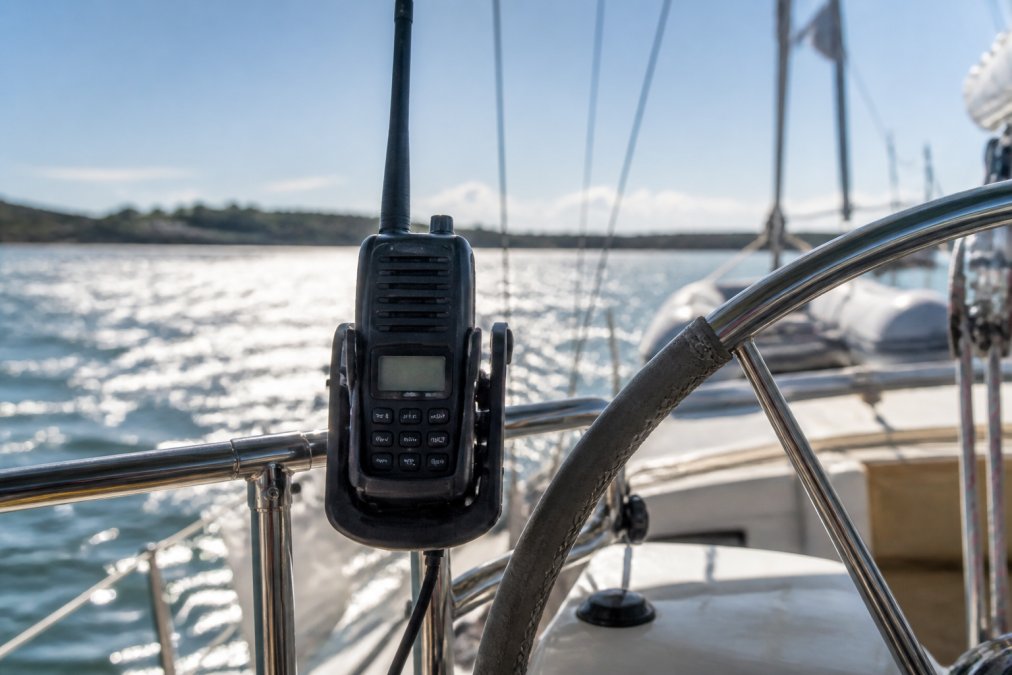
Standard Horizon Handheld VHF Radios
Standard Horizon dominates the handheld VHF market because they build radios that work, float if dropped, and cost significantly less than fixed-mount alternatives. For weekend sailors, a handheld is often smarter than fixed installation because you get portability, easier upgrades, and no permanent wiring.
The Standard Horizon HX210 ($139.99) is the budget entry point, a floating, submersible unit that receives all U.S., Canadian, and international marine channels plus NOAA weather alerts. The display is readable in sunlight, and it includes an emergency strobe that activates if it hits the water. For daysailers wanting basic VHF capability without complexity, this covers everything needed.
![Standard Horizon HX210 6W Floating Handheld Marine VHF Transceiver [HX210]](https://cdn.shopify.com/s/files/1/0842/4914/9751/files/63675XL.jpg?v=1775843997)
The Standard Horizon HX891BT ($279.99) adds Bluetooth connectivity, built-in GPS, dual scrambler systems, and FM radio reception. Bluetooth enables hands-free operation with wireless headsets, which matters when single-handing or managing crew tasks. Battery life runs approximately 12-15 hours on the included lithium-ion battery.
Both units are waterproof to submersion standards, include charging cradles and multiple cables, and come ready to use out of the box. No professional installation required.
Garmin Fixed-Mount VHF Systems
For permanently installed radios integrating with a chartplotter, Garmin's VHF 215 ($549.99) is the alternative to consider. This fixed-mount unit features 25-watt transmit power, built-in GPS, and Class D Digital Selective Calling (DSC). It connects via NMEA 2000 network to compatible Garmin chartplotters, so your position displays automatically in distress calls.
Installation requires mounting the radio head unit and running power and antenna cables, not a weekend project for those uncomfortable with marine wiring. The benefit is seamless integration: your chartplotter becomes your radio control panel.
For weekend sailors with older boats or simpler setups, this integration often feels like overkill. A handheld radio delivers the same safety capability without installation complexity. But if you already have Garmin electronics, adding the VHF 215 makes sense.
The Standard Horizon GX1410GB ($269.99) is the fixed-mount alternative that bridges the gap, a 25-watt Class D DSC radio with built-in GPS. Installation is simpler because everything is self-contained. The trade-off is less integration flexibility, but for weekend sailors, that's rarely a requirement.
Budget-Friendly vs. Marine-Grade Equipment
Marine-grade doesn't always mean better for your situation. It means built to industrial standards, tested for commercial reliability, and priced accordingly.
Marine-grade equipment features corrosion-resistant materials, submersion-rated housings, and redundant systems designed for continuous operation. A commercial fishing vessel running 200+ days per year needs that durability. A sailboat launching 30 weekends per year doesn't.
Budget-friendly alternatives aren't cheap equipment, they're designed for recreational use with appropriate durability for that use case. A Standard Horizon handheld rated for submersion will outlast a consumer-grade radio in saltwater but costs half what a commercial-grade system costs because it doesn't include features for 24/7 operation.
![Standard Horizon HX891BT Handheld VHF w/Bluetooth - Black [HX891BTBK]](https://cdn.shopify.com/s/files/1/0842/4914/9751/files/103608XL.jpg?v=1775849093)
Buy marine-grade for electronics staying on the boat year-round (VHF radios, GPS chartplotters, autopilots). Buy recreational-grade for seasonal gear you store indoors (handheld lights, portable speakers, backup instruments).
American Boat and Yacht Council standards for marine electrical systems establish guidelines for marine-rated equipment. Equipment meeting those standards is genuinely more durable in saltwater, but the cost premium isn't always justified for light recreational use.
Price Matching Marine Gear Across Retailers
Price matching exists in marine retail, but it's not automatic. Most retailers match competitor prices on identical products if the competitor is an authorized dealer, the price is current and in-stock, and the product is exactly the same.
Contact the retailer directly before assuming they won't match. Many marine retailers have price-match policies but don't advertise them heavily. Charleston Yachting competes on price for products in stock, particularly on popular items like Standard Horizon and Garmin electronics.
![Standard Horizon GX1410GB Eclipse Series 25W Fixed Mount VHF/GPS - White [GX1410GW]](https://cdn.shopify.com/s/files/1/0842/4914/9751/files/108197XL.jpg?v=1775849652)
Price matching doesn't cover discontinued items, bundle deals, clearance pricing, or items from unauthorized resellers. If the lower price comes from a marketplace seller or unauthorized distributor, the original retailer won't match it, and you should be cautious about authenticity and warranty coverage.
The real savings come from knowing what you need before shopping. A Standard Horizon HX210 is a Standard Horizon HX210, price shouldn't vary much between authorized retailers. The decision to spend more on a fixed-mount unit isn't about finding a better deal on the same item; it's about whether additional capability justifies additional cost for your boat.
Weekend Sailor Gear Essentials Without the Premium Price
Weekend sailors need a minimal electronics package covering safety, navigation, and communication. You don't need racing-grade systems or redundant instruments.
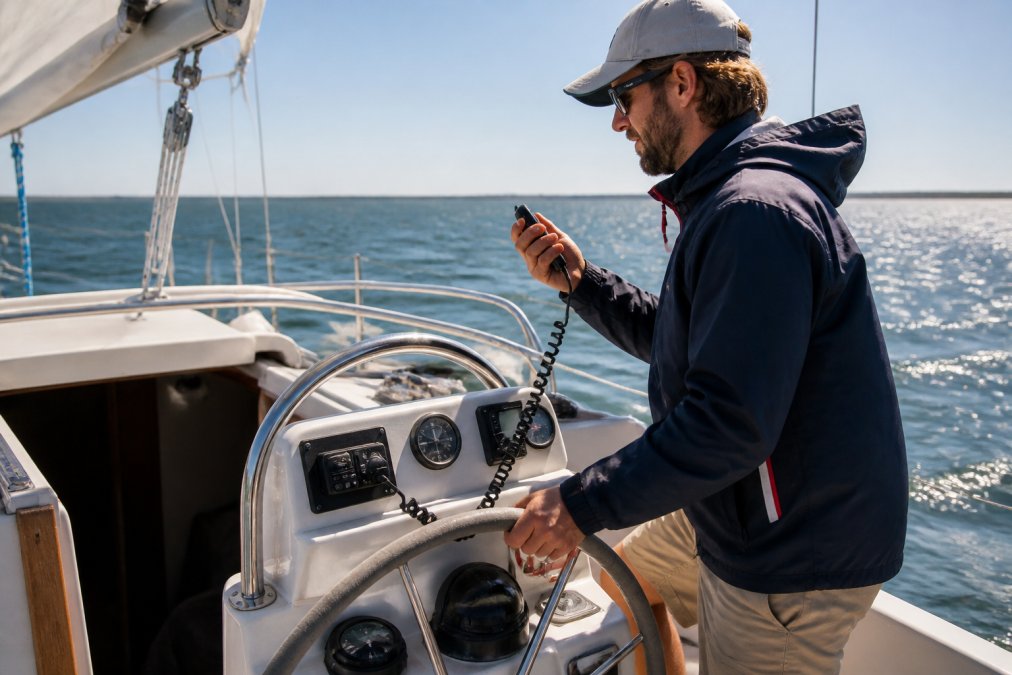
A VHF radio is non-negotiable, your primary safety tool and connection to other vessels and shore. For most weekend sailors, a Standard Horizon handheld ($139.99-$279.99) covers this completely.
A GPS chartplotter matters if navigating beyond sight of land or in low-visibility conditions. You don't need a multifunction display with integrated sonar and autopilot control. A basic chartplotter with pre-loaded charts does the job. Many weekend sailors use a tablet with a chartplotter app and small GPS receiver instead of dedicated marine electronics, it's cheaper and updates automatically.
A compass is essential as a backup. Electronic compasses fail; mechanical compasses don't. Cost is minimal.
Binoculars for spotting navigation markers and other vessels. You don't need marine-specific binoculars.
A depth sounder tells you when approaching shallow water. Useful but not critical for daysailing in familiar waters. Cost ranges from $100-$400.
This package totals roughly $500-$800. Add a second handheld VHF as backup for another $140, and you're at $650-$940 for a complete safety-focused electronics package. Professional racing crews spend 5-10 times that. Weekend sailors don't need to.
Start with what keeps you safe, and you'll use the equipment you buy.
DIY Installation vs. Professional Outfitting Services
Installing handheld units yourself is straightforward. Mounting fixed radios, running antenna cables, and integrating systems is where most weekend sailors should call a professional.
DIY handheld installation: unbox it, charge the battery, program your MMSI number, program favorite channels. Takes 30 minutes. No special skills required.
DIY fixed-mount installation requires running cables through the boat, mounting the antenna, integrating power distribution, and possibly networking to other electronics. If your boat has a clean power distribution panel and existing cable runs, you might manage it. Otherwise, you risk water intrusion, interference, and damaged finishes that cost more to fix than professional installation.
Professional marine electronics installation typically costs $200-$500 per unit depending on cable runs and complexity. An authorized dealer can install a Garmin VHF 215 with antenna, power, and network integration in 4-6 hours. The cost includes warranty on installation work.
If you're comfortable with marine wiring and your boat's layout is straightforward, DIY saves money. If uncertain about power distribution, antenna placement, or cable routing, professional installation prevents costly mistakes. Most weekend sailors should lean toward professional installation for anything beyond handheld units.
Charleston Yachting stocks the electronics you need and can recommend authorized installers in your area.
Conclusion
The market for marine electronics alternatives has matured significantly. Weekend sailors now have genuine choices: handheld radios costing a fraction of fixed systems, budget-conscious brands that don't sacrifice reliability, and retailers willing to match prices on popular items. The key is understanding what you actually need versus what sales pitches tell you to want.
Standard Horizon handheld VHF radios deliver safety-critical communication without complexity or cost of fixed installations. Garmin fixed-mount systems make sense if building an integrated navigation platform. Charleston Yachting carries both, plus supporting gear that turns a basic sailboat into a properly equipped vessel. We offer same-day shipping on in-stock items, competitive pricing on industry-leading brands, and expertise to help you choose the right electronics for your boat and sailing style.
| Alternative | Best For | Starting Price | Key Feature |
|---|---|---|---|
| Standard Horizon HX210 | Budget-conscious daysailers | $139.99 | Floating, submersible, no setup required |
| Standard Horizon HX891BT | Crews needing hands-free operation | $279.99 | Bluetooth connectivity, built-in GPS |
| Standard Horizon GX1410GB | Fixed-mount without full integration | $269.99 | Self-contained GPS and DSC calling |
| Garmin VHF 215 | Boats with existing Garmin systems | $549.99 | NMEA 2000 network integration |
Shop All at Charleston Yachting and get the marine electronics alternatives that match your boat, your budget, and your sailing style. Same-day shipping on most items means you're outfitted and ready to launch within 24 hours.
Frequently Asked Questions
What should I look for in a marine electronics return policy?
A solid marine electronics return policy should allow 30-60 days for returns, cover damage that occurs during normal use, and process refunds within 10-14 business days. Check whether the retailer requires original packaging and whether they cover return shipping. Charleston Yachting stands behind its products with straightforward returns and same-day shipping on replacements, making it simple to swap out equipment if something doesn't work with your existing system.
Do major marine retailers offer price matching for marine gear?
Many retailers offer price matching, but policies vary significantly. Some match only advertised prices from competitors, while others require proof of lower pricing. When shopping for marine electronics, ask retailers directly about their price matching policy before purchasing. Standard Horizon and Garmin products often have consistent pricing across authorized dealers, so comparing total cost including shipping and return policies matters more than chasing small price differences.
Is my 15-year-old Garmin chartplotter still worth keeping, or should I upgrade?
Older Garmin systems work fine for basic navigation, but newer electronics offer better integration with modern safety features, faster processing, and compatibility with current software updates. If your system still powers on and shows your position, it's functional for weekend sailing. However, if you're adding new equipment like a VHF radio or autopilot, upgrading to a current-generation chartplotter ensures seamless system integration and eliminates compatibility headaches down the road.
What marine electronics do weekend sailors actually need versus what's overkill?
Essential weekend sailor gear includes a VHF radio for safety and communication, a basic GPS chartplotter, and a compass. A handheld VHF like the Standard Horizon HX210 ($139.99) covers communication needs affordably. Skip racing-grade autopilots, redundant GPS systems, and AIS unless you're regularly offshore or competing. Focus spending on reliability and waterproofing over feature count, a submersible handheld VHF that floats matters more than a radio with ten extra channels you'll never use.
How much can I actually save by buying marine electronics from online retailers instead of big-box stores?
Online marine specialists often match or beat big-box pricing because they carry focused inventory without showroom overhead. A Standard Horizon VHF radio costs $139.99-$279.99 across most authorized retailers, so savings come from avoiding shipping fees and return hassles rather than deep discounts. The real advantage is same-day shipping from retailers like Charleston Yachting, which gets replacement equipment to you faster than big-box stores can process special orders, and expert support for system integration questions.
This article was written using GrandRanker