

Best Marine Electronics for Weekend Sailors

Table of Contents
- Essential Sailboat Navigation Equipment for Weekend Cruising
- Top Marine Electronics for Weekend Sailors: Quick Comparison
- Understanding NMEA 2000 Network Basics
- Power Budget Calculation for Weekend Sailing
- Used vs. New Electronics: What Makes Sense for Your Budget
- Installation and DIY Difficulty: What You Can Handle Yourself
- Conclusion
Last Updated: August 25, 2026
Essential Sailboat Navigation Equipment for Weekend Cruising
Weekend sailors need reliable gear that balances functionality with simplicity. The best marine electronics deliver essential navigation, communication, and safety features without the complexity of offshore racing systems. Charleston Yachting helps sailors outfit their boats with equipment that actually gets used on the water.
Your navigation setup should answer three core questions: Where am I and where am I going? Can someone reach me if I need help? What's happening below the waterline? A solid weekend cruising system addresses all three without overwhelming you with unused features.
You don't need to spend $15,000 to answer these questions well. A focused approach, chartplotter, VHF radio, depth sounder, and transducer, covers 95% of what matters. Add an autopilot if you're cruising beyond day trips, and you're set.
Top Marine Electronics for Weekend Sailors: Quick Comparison
| Component | Best Choice | Starting Price | Key Benefit |
|---|---|---|---|
| Chartplotter | Garmin GPSMAP 8612 | $3,799.99 | 12" sunlight-readable display, NMEA 2000 networking |
| VHF Radio | Garmin VHF 215 | $549.99 | 25-watt power, DSC calling, plug-and-play installation |
| Transducer | Airmar DST820 | $437.60 | Speed, depth, and temperature in one sensor |
| Autopilot | Garmin Reactor 40 | $2,249.99 | Hydraulic steering, wind hold for sailing |
| Antenna | Shakespeare Galaxy 5225-XT | $259.99 | 6dB gain, 8-foot length for extended range |
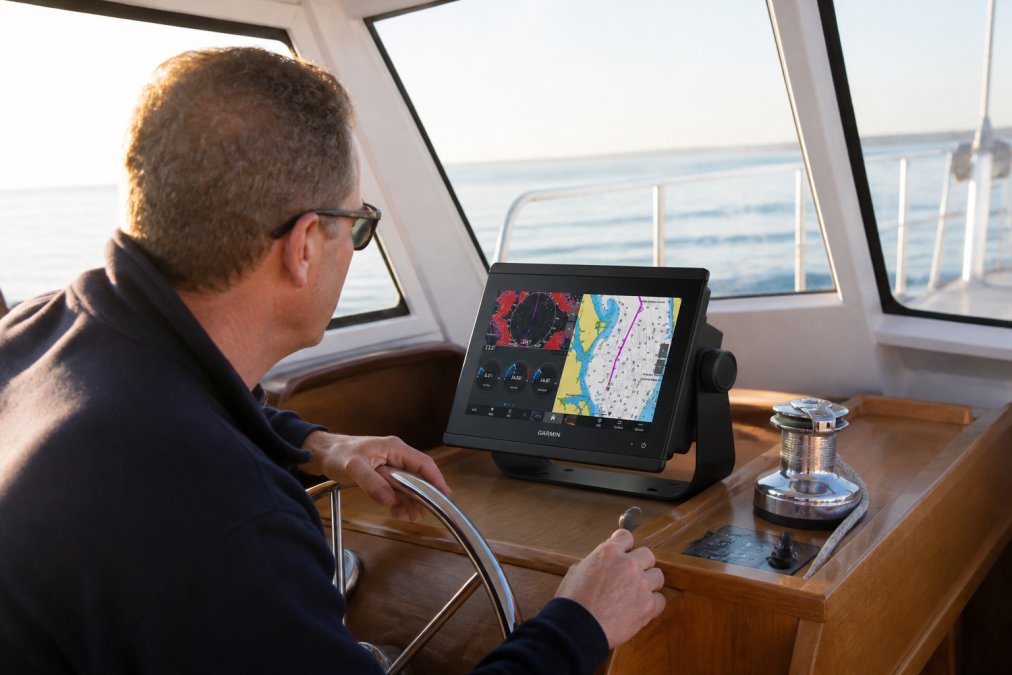
Chartplotters: The Heart of Your Electronics Suite
A chartplotter is your command center where navigation happens and you see your position relative to hazards. For weekend sailors, the Garmin GPSMAP 8612 strikes the right balance between capability and usability. The 12-inch touchscreen is large enough to read in sunlight even with polarized sunglasses. It comes preloaded with Navionics+ coastal charts covering U.S. and Canadian waters.
![Garmin GPSMAP 8612 Chartplotter GN+ [010-02092-50]](https://cdn.shopify.com/s/files/1/0842/4914/9751/files/97055XL.jpg?v=1775848012)
What matters most: sunlight readability and chart quality. The GPSMAP 8612's in-plane switching technology keeps the image clear at any viewing angle, which matters when multiple crew members need to see the screen from different helm positions.
The NMEA 2000 networking capability makes your chartplotter the hub for your entire system. Connect your VHF radio, transducer, autopilot, and wind sensor, everything talks to everything else. One display shows water depth, speed, wind direction, and engine RPM simultaneously. This integration separates a weekend system from standalone gadgets.
VHF Radios: Communication You Can Rely On
A VHF radio is non-negotiable for safety. The Garmin VHF 215 delivers everything a weekend sailor needs: 25-watt transmit power, Class D Digital Selective Calling (DSC), and NMEA 2000 compatibility. The 25-watt output reaches reliably to 10-15 nautical miles, covering most weekend cruising ranges (fcc.gov).
DSC functionality is critical. When you transmit a distress call, DSC automatically sends your vessel's MMSI number and GPS position to rescue services. You don't have to remember your boat's identification or relay coordinates.
Installation is straightforward. The VHF 215 plugs directly into your NMEA 2000 network via a single cable. The removable microphone handset lets you position the radio below deck while operating from the helm, keeping water spray away.
What separates this from cheaper handheld options: power output and antenna gain. A handheld VHF maxes out at 5 watts with a short antenna (fcc.gov). The fixed-mount VHF 215 with a proper antenna like the Shakespeare Galaxy 5225-XT extends your range dramatically.
Transducers: Depth, Speed, and Temperature Data
A transducer measures three critical pieces of information: water depth, speed through water, and water temperature. The Airmar DST820 is the modern standard for weekend sailors, replacing the old approach of separate depth sounders and speed sensors with one thru-hull installation.
Depth data prevents you from running aground. Speed data helps you trim sails and understand your boat's performance. Temperature data warns of engine cooling problems. The DST820's Gen2 paddlewheel design provides reliable readings from 0.3 knots up to 45 knots (peer-reviewed research).
Installation requires drilling a 1-inch thru-hull hole below the waterline. If you're uncomfortable drilling into your boat, hire this out. Once installed, the sensor connects via NMEA 2000 to your chartplotter. The Bluetooth connectivity enables smartphone calibration via Airmar's CAST app.
Autopilots: Your Tireless Co-Pilot
An autopilot transforms weekend cruising by steering your boat to a heading or following a GPS waypoint while you handle sails or rest. The Garmin Reactor 40 hydraulic autopilot is designed for sailboats with hydraulic steering systems.
For weekend sailors, the autopilot's value is fatigue reduction. On a 20-mile coastal cruise, hand-steering for four hours is exhausting. An autopilot lets you sail longer and more enjoyably. It also enables single-handed sailing.
The Reactor 40 includes the GHC 50 display showing heading, course deviation, and control options. You can hold a heading, follow a GPS track, or engage wind hold (which maintains your angle relative to the wind). Wind hold is the sailing-specific feature that separates marine autopilots from powerboat models.
Power consumption is a consideration. The Reactor 40 draws about 10-15 amps when actively steering. On a 200-amp-hour battery, an afternoon of autopilot use is manageable.
Understanding NMEA 2000 Network Basics
NMEA 2000 is the standard protocol that lets your marine electronics talk to each other. It's a data bus where all your devices listen and speak. Your chartplotter, VHF radio, transducer, autopilot, and wind sensor all connect to the same network and share data.
The network runs on a backbone cable with drop cables connecting individual devices. Each device has a connector that looks like a thick USB plug. The backbone uses T-connectors to branch the signal, and terminators at each end complete the circuit.
Without NMEA 2000 integration, you'd have multiple independent displays showing different information. With it, your chartplotter becomes the master display showing depth, wind, and autopilot status simultaneously. You glance at one screen instead of three.
Installation is straightforward for weekend sailors. Start with your chartplotter as the hub and run the backbone cable to each device using drop cables and T-connectors. Power the entire network from a single 12-volt circuit with a fuse. Keep cable runs short and use marine-grade shielded cable. If you're uncertain about wiring, hire a marine electrician.
Power Budget Calculation for Weekend Sailing
Your battery bank must support your electronics without running dry. Weekend sailors often underestimate power consumption and end up unable to start their engines after a night at anchor.
Calculate your power budget by listing each device and its draw:
- Chartplotter (GPSMAP 8612): 5 amps continuous
- VHF radio (standby): 0.5 amps; (transmitting): 20 amps peak
- Transducer (DST820): 0.3 amps
- Autopilot (Reactor 40, active steering): 12 amps
- Navigation lights: 3-5 amps
- Cabin lighting: 2-10 amps
For a typical weekend cruiser anchored overnight with navigation lights, chartplotter, and cabin lighting running, budget 15-20 amps continuous. If you run the autopilot for two hours, add 24 amp-hours. A 200-amp-hour battery bank can handle this comfortably.
![Garmin Reactor 40 Hydraulic Autopilot w/GHC 50 Autopilot Instrument [010-02794-00]](https://cdn.shopify.com/s/files/1/0842/4914/9751/files/94564XL.jpg?v=1775847757)
The critical factor is your alternator. A standard automotive alternator outputs 50-80 amps, but only at engine RPM. A marine alternator designed for cruising outputs 100+ amps and charges more efficiently at low speeds. Weekend sailors typically motor 30-60 minutes per outing to charge batteries and reach their cruising area.
Used vs. New Electronics: What Makes Sense for Your Budget
Garmin and B&G electronics hold value, but older models have real limitations for weekend sailors.
A used chartplotter from five years ago might cost $1,500 versus $3,800 for the new GPSMAP 8612. The older unit's screen is smaller, less bright, and slower to redraw charts. If you're upgrading from nothing, a used unit gets you on the water. If you're replacing a 15-year-old system, the new unit's interface and speed justify the cost.
VHF radios are commodity items. A used Garmin VHF 215 from three years ago functions identically to a new one. If you find one in good condition for $300 instead of $550, it's a smart buy.
![Garmin VHF 215 Marine Radio [010-02097-00]](https://cdn.shopify.com/s/files/1/0842/4914/9751/files/73200XL.jpg?v=1775845271)
Transducers: the DST820's Gen2 paddlewheel is genuinely better than older designs. For weekend sailors, this is a nice-to-have. Buy used if the price is right.
Autopilots: spend new money here. An older hydraulic autopilot from 10 years ago uses outdated sensors and calibration routines. Modern autopilots integrate with wind sensors and GPS, enabling features older systems can't match. Used autopilots are risky, you don't know the maintenance history.
The rule: buy used navigation electronics for cost savings, but buy new safety-critical systems (VHF, autopilot) for reliability.
Installation and DIY Difficulty: What You Can Handle Yourself
Weekend sailors vary in mechanical confidence. Here's an honest assessment of what's realistic.
Chartplotter installation: DIY-friendly. Mount the screen, run power and NMEA 2000 cables, connect the antenna. Two to three hours for someone with basic boat knowledge. If you're starting from scratch and need to route cables, budget a full day.
VHF radio installation: DIY-friendly if you're comfortable with basic wiring. The challenge is the antenna, which needs to run from the radio to a high point on your boat. If your boat already has antenna penetrations, it's a two-hour job. If you're drilling new holes, hire it out.
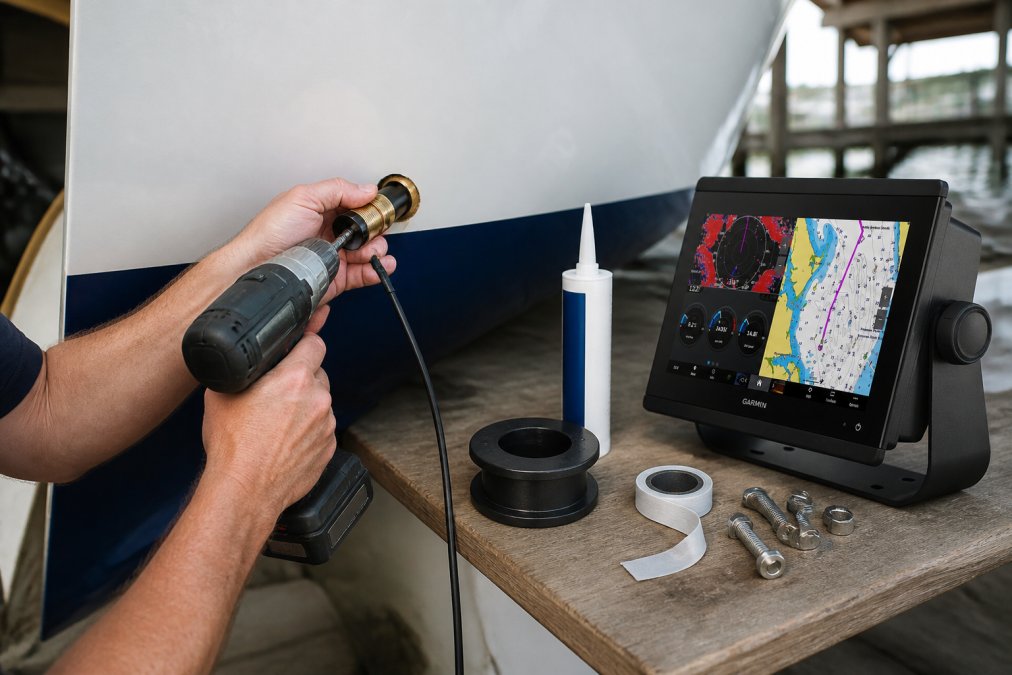
Transducer installation: Not DIY unless you're comfortable with thru-hulls. This requires drilling a 1-inch hole below the waterline and installing a fitting that seals underwater. One mistake floods your boat. Hire a marine surveyor or electrician for $200-400 in labor.
Autopilot installation: Hire a professional. Hydraulic autopilot systems require understanding your steering system, bleeding air from hydraulic lines, and calibrating sensors. A marine technician will charge $1,500-2,500 in labor but ensure it works correctly and safely.
NMEA 2000 network: DIY if you're organized. The network is low-voltage and forgiving. The challenge is keeping cable runs organized and using proper connectors. If you're adding devices to an existing network, it's straightforward.
The honest truth: weekend sailors save money by doing simple installations themselves but should hire professionals for thru-hull work and hydraulic systems.
Conclusion
The best marine electronics for weekend sailors balance capability with simplicity. A Garmin chartplotter, VHF radio, transducer, and quality antenna cover navigation, communication, and safety. An autopilot and proper NMEA 2000 integration transform the experience from functional to enjoyable.
Charleston Yachting stocks all these components from Garmin, Airmar, and Shakespeare, brands that deliver reliability without complexity. Our same-day shipping means you can order a complete electronics suite on Monday and be installing it by Wednesday. Whether you're upgrading a 15-year-old system or outfitting a new boat, we have the gear that weekend sailors actually use. Shop All and get your boat ready for the water.
Frequently Asked Questions
What are the essential marine electronics for a weekend sailboat?
At minimum, weekend sailors need a chartplotter with GPS, a VHF radio for communication and safety, and a transducer for depth and speed data. The Garmin GPSMAP 8612 chartplotter ($3,799.99) paired with a Garmin VHF 215 radio ($549.99) provides reliable navigation and communication. Add the Airmar DST820 transducer ($437.60) for speed and depth data. These three components form a functional navigation suite that handles coastal cruising without excessive complexity.
Do I need to upgrade my 15-year-old chartplotter if it still works?
If your older unit functions reliably, you don't have to upgrade immediately. However, newer chartplotters like the Garmin GPSMAP 8612 offer better chart detail, faster processing, NMEA 2000 networking for integration with other sensors, and improved sunlight readability. Modern units also receive regular firmware updates for accuracy and safety features. Consider upgrading if your charts are outdated, if you want to add sensors (autopilot, radar), or if the display is hard to read in bright sunlight.
How do I know marine electronics will work together on my boat?
Compatibility depends on networking standards. Most modern Garmin electronics use NMEA 2000 networking, which allows devices to communicate seamlessly. The Garmin GPSMAP 8612 chartplotter includes NMEA 2000 connectors and works with the Garmin VHF 215 radio, Garmin Reactor 40 autopilot, and Airmar transducers. Always verify that devices share the same network protocol before buying. Charleston Yachting's product descriptions list compatibility details, and our team can confirm integration before purchase.
What's the typical power consumption for weekend sailing electronics?
A basic setup (chartplotter, VHF radio, transducer) typically draws 15-30 watts during normal operation. Autopilots consume 20-40 watts depending on steering load. For weekend sailors, a 200-amp-hour battery bank charged by solar panels or engine charging usually provides sufficient power. Calculate your total amp-hour needs by adding daily consumption hours and building a 20% safety margin into your battery capacity.
This article was written using GrandRanker