

Are Self-Tailing Winches Worth the Upgrade for Cruising?

Last Updated: November 18, 2026
Quick Summary
Self-tailing winches are widely recommended for most applications and are especially useful when sailing shorthanded, since the self-tailer grips the line automatically so one person can trim a loaded sheet without tailing by hand. We recommend manual self-tailing winches as the default for coastal cruising and weekend sailing, stepping up to electric only when the load genuinely exceeds what your crew can apply comfortably.
- Self-tailing winches matter most with two-person crews, single-handing, or short-handed night sailing.
- Power ratio, not drum diameter, determines how much load a winch can handle.
- Convert a winch under five years old, in good condition, and correctly sized; replace anything older or undersized.
- Andersen specifies servicing winches roughly every two years under normal use.
- Two-speed Andersen models range from $1,079.10 to $1,709.10 each.
Table of Contents
- Why Self-Tailing Winches Matter on a Cruising Sailboat
- Self-Tailing Winch Sizing: Matching Drum and Power to Your Boat
- Manual vs Electric Sailboat Winches: Which Fits Your Crew
- The Andersen Full Stainless Line, Model by Model
- Self-Tailing Winch Conversion Kit vs New Winch
- Sailboat Winch Maintenance and Total Cost of Ownership
- Choosing the Right Andersen Winch for Your Cockpit
- Frequently Asked Questions
Why Self-Tailing Winches Matter on a Cruising Sailboat
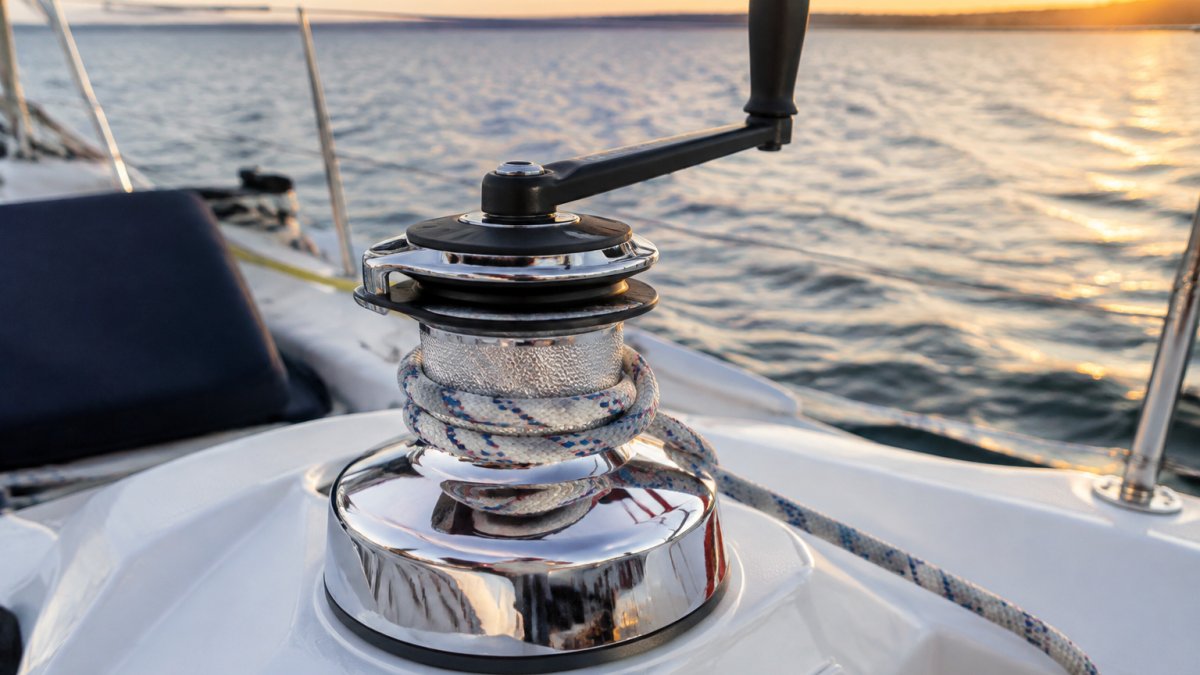
Self-tailing winches are the single upgrade that changes how a cruising sailboat feels under sail, because they let one person trim a loaded sheet without tailing it by hand. Self-tailing winches are widely recommended for most applications and are especially useful when sailing shorthanded, since the self-tailer grips the line automatically.
The mechanics are simple. A set of spring-loaded jaws at the top of the drum captures the tail of the sheet, so the winch holds tension while you crank. On a jib sheet with 15 knots across the deck, that difference is the gap between a controlled trim and a scramble.
Here is the honest case for upgrading. Self-tailing winches matter most when your crew is two people, when you single-hand, or when you sail short-handed at night. They matter least on a boat with four eager hands and a dedicated tailer. Below, we break down sizing, gearing, manual versus electric, and what a full set actually costs.
Self-Tailing Winch Sizing: Matching Drum and Power to Your Boat
Winch sizing starts with the load on the line, not the length of your boat. A 35-foot cruiser with a large overlapping headsail can load a sheet harder than a 40-footer with a small working jib.
Manufacturers publish power ratios for exactly this reason. Power ratio is the mechanical advantage of the winch, calculated as handle length times gear ratio, divided by drum radius. The pull of the winch depends on the power ratio rather than on the drum diameter alone.
Reading Power Ratio Instead of Drum Diameter
Two winches with identical drums can have very different pulling power. Power ratio, not drum diameter, is what determines how much load a winch can handle, so compare the listed power ratios when choosing between models.
Match the winch to the job, and check the line diameter range against your sheets and halyards before buying.
Manual vs Electric Sailboat Winches: Which Fits Your Crew
Manual winches suit many cruising boats, while electric winches are an option for heavier loads. The decision depends on load, crew, and electrical capacity, not boat length alone.
Start with the load your crew can actually apply. When the required pull exceeds what the crew can generate comfortably, electric assist may be worth considering.
The electrical side is the part buyers often underestimate. An electric winch requires adequate cable sizing, a suitable breaker, and a battery bank that can supply it without voltage problems for the rest of the system.
The trade-offs go both ways. Electric winches add wiring and a battery load, while manual winches demand more physical effort.
We recommend manual self-tailing winches as the default for coastal cruising and weekend sailing. Step up to electric when the physical load genuinely exceeds what your crew can apply comfortably, typically on a big mainsail or a heavy anchor rode. A common mistake is buying electric to solve a sizing problem: a correctly sized manual winch often removes the need entirely. Before committing to electric, confirm three things: the winch is correctly sized for the load, the battery bank and charging can support the draw, and the installation has a clean cable route with a breaker within reach of the helm.
The Andersen Full Stainless Line, Model by Model
The Andersen full-stainless range features a Power Rib drum, which uses vertical ribs rather than an abrasive surface, and polished grade 316 stainless steel construction.
Here is how the models compare on the specs that decide the purchase:
| Model | Price | Speeds | Power Ratio (2nd) | Line Size | Weight |
|---|---|---|---|---|---|
| ANDERSEN 28 ST FS | $1,079.10 | 2 | 28.6:1 | 8-14 mm | 8.6 lb |
| ANDERSEN 40 ST FS | $1,259.10 | 2 | 40.0:1 | 8-14 mm | 10.8 lb |
| ANDERSEN 46 ST FS | $1,709.10 | 2 | 47.1:1 | 8-14 mm | 17.2 lb |
Weight
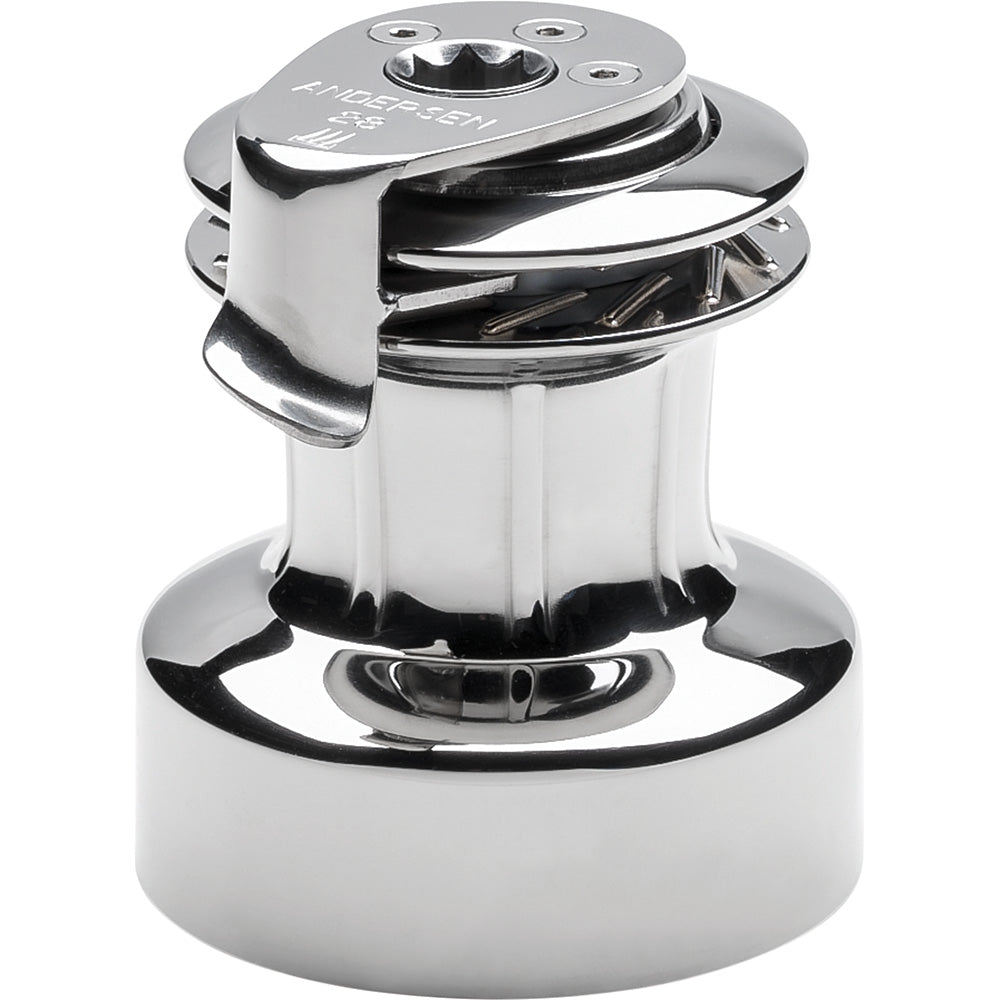
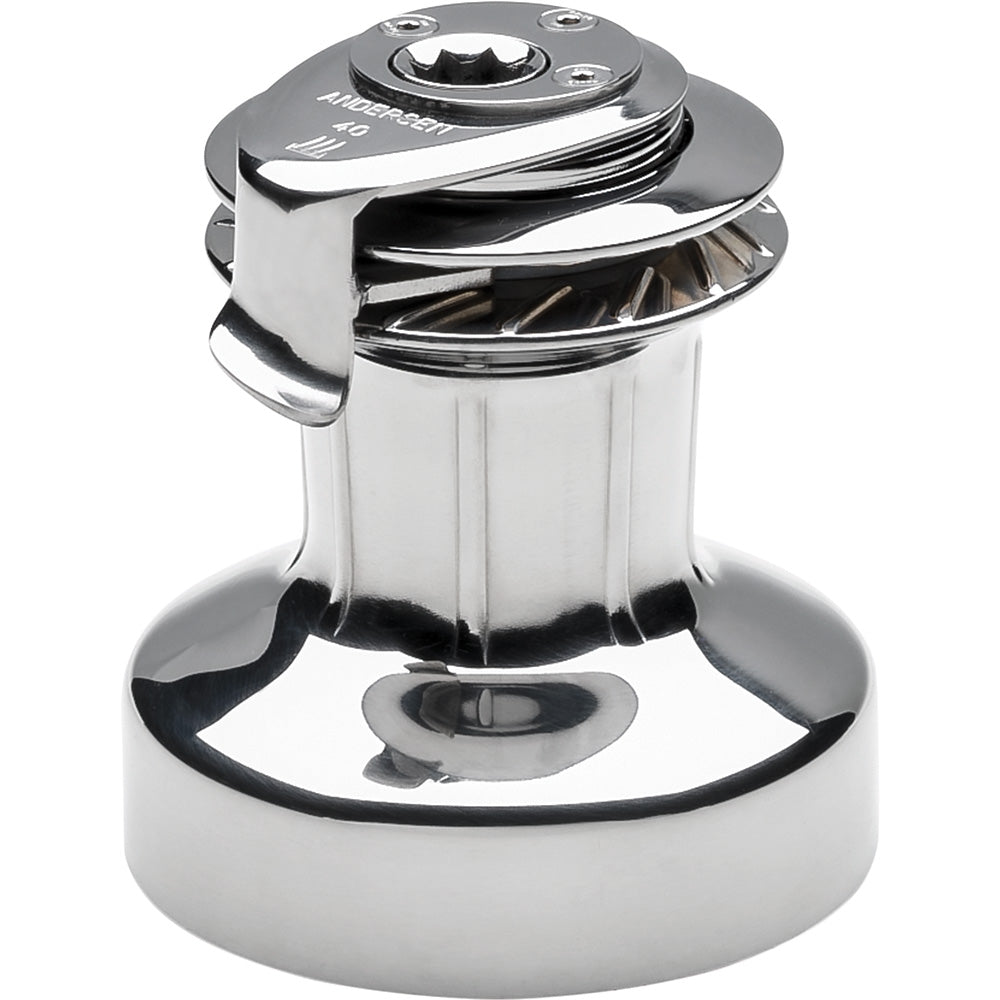
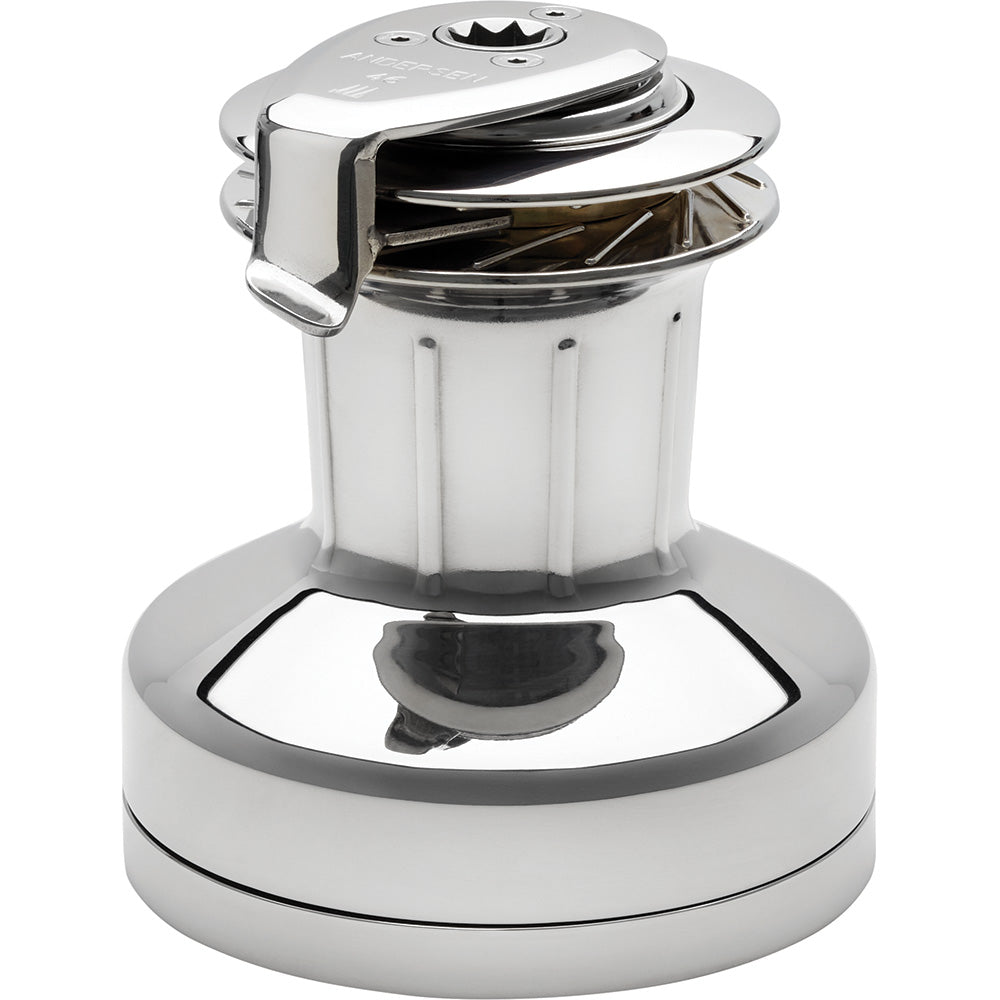
The 28 ST FS, 40 ST FS and 46 ST FS are two-speed full-stainless models with self-tailing jaws, differing in size and the loads they are suited to.
Two single-speed models round out the line: the 18 ST FS at $764.10 with an 18.8:1 power ratio, and the 12 ST FS at $584.96 with a 9.5:1 ratio. Both suit control lines and light halyards where a second speed adds nothing.
Self-Tailing Winch Conversion Kit vs New Winch
Our rule: convert a winch that is under five years old, in good condition, and correctly sized. Replace anything older or undersized. A conversion kit on a tired winch just delays the purchase.
Sailboat Winch Maintenance and Total Cost of Ownership
Winch maintenance is simple and cheap, and skipping it is the fastest way to turn a $1,000 purchase into a $1,000 replacement. Andersen specifies servicing roughly every two years under normal use. The routine is straightforward: strip the winch, clean old grease from the pawls and bearings, inspect for corrosion, and re-grease with a marine-grade lubricant. Stainless drums resist corrosion well, but deck hardware around them does not always keep up, so check adjacent fittings at the same time. Our guide to signs of corrosion on marine deck hardware covers what to look for before it becomes expensive.
Purchase prices for the two-speed models range from $1,079.10 to $1,709.10 each. Winch ownership also involves periodic servicing and occasional replacement of parts such as pawls, springs and jaws.
That math favors stainless. An aluminum drum winch costs less up front but wears faster and can corrode in saltwater. For owners protecting a long-term investment, our guide on how to maintain sailboat winches for longevity walks through the service routine step by step.
Retrofit constraints deserve a careful look before you buy. Measure the existing footprint, the line entry angle, and the clearance above and around the drum before ordering, since mounting holes and drum height can differ from what is already installed.
Self-tailing winches can slip if the jaws are worn or the line is outside the jaw range, and overrides can occur when a slack line goes on under load. Ease the load, unwrap the line carefully, and inspect the jaws before the next trim. Keep hands clear of the jaws and drum while cranking.
Choosing the Right Andersen Winch for Your Cockpit
Match the winch to the line it controls, then to your crew. That order settles most decisions.
Match the winch to the line it controls and to your crew. The two-speed Andersen models differ in size and the loads they suit, and the single-speed 18 and 12 models are options for lighter lines.
Charleston Yachting carries the Andersen full-stainless winch range with same-day shipping.
The upgrade question comes down to crew and load. If you sail shorthanded, or plan to, self-tailing winches remove the most physical work from every tack and trim. Charleston Yachting carries the Andersen full-stainless line with same-day shipping, premium rigging and hardware, and a selection built for sailors who maintain their own boats. Get started with Charleston Yachting and put a properly sized self-tailing winch on your cockpit this season.
Frequently Asked Questions
How do I choose the right size self-tailing winch for my sailboat?
Start with the power ratio, not the drum diameter. Power ratio is handle length times gear ratio divided by drum radius, and it determines how much pull the winch delivers. Match line diameter to the drum's listed range, and size up if you sail shorthanded or fly large headsails.
Are electric self-tailing winches worth it for cruising?
Electric winches can be worth considering when crew size is small or loads are heavy. Manual winches need no wiring, while electric options add price and installation complexity.
Can I convert a standard winch to a self-tailing winch?
Conversion depends on the existing winch and the availability of a matching kit. Compare the cost against a new self-tailing winch before deciding.
How do you maintain a self-tailing winch?
Winches benefit from periodic inspection and greasing. Check the self-tailing jaws for wear and confirm the line entry angle is correct, since a poor lead can cause overrides. Rinse with fresh water after saltwater exposure.
What should I check before replacing a sailboat winch?
Measure the existing base diameter and bolt pattern first, because a new winch must fit the same footprint or you will need new mounting holes. Confirm the line size range matches your sheets and halyards, and check that the drum height clears your coaming.
