

Reliable Marine Electronics Online Store: What to Check

Table of Contents
- What Defines a Reliable Marine Electronics Online Store?
- Authorized Marine Electronics Dealer Status: Why It Matters
- How to Choose Marine Navigation Systems Across Brands
- Marine Electronics Warranty Coverage: What to Verify Before Checkout
- Compare Top Multi-Function Displays for Your Vessel
- DIY vs. Professional Installation: Know Your Limits
- The Bottom Line on Buying Marine Electronics Online
- Frequently Asked Questions
Last Updated: September 9, 2026
What Defines a Reliable Marine Electronics Online Store?
A reliable marine electronics online store combines authorized product sourcing, transparent warranty support, and expert guidance before and after your purchase. Most boaters discover these qualities only after a problem surfaces.
What separates a dependable source from a simple order-taker is the infrastructure behind the transaction: verified inventory from authorized distributors, staff who understand system integration, and a return process that does not vanish after checkout.
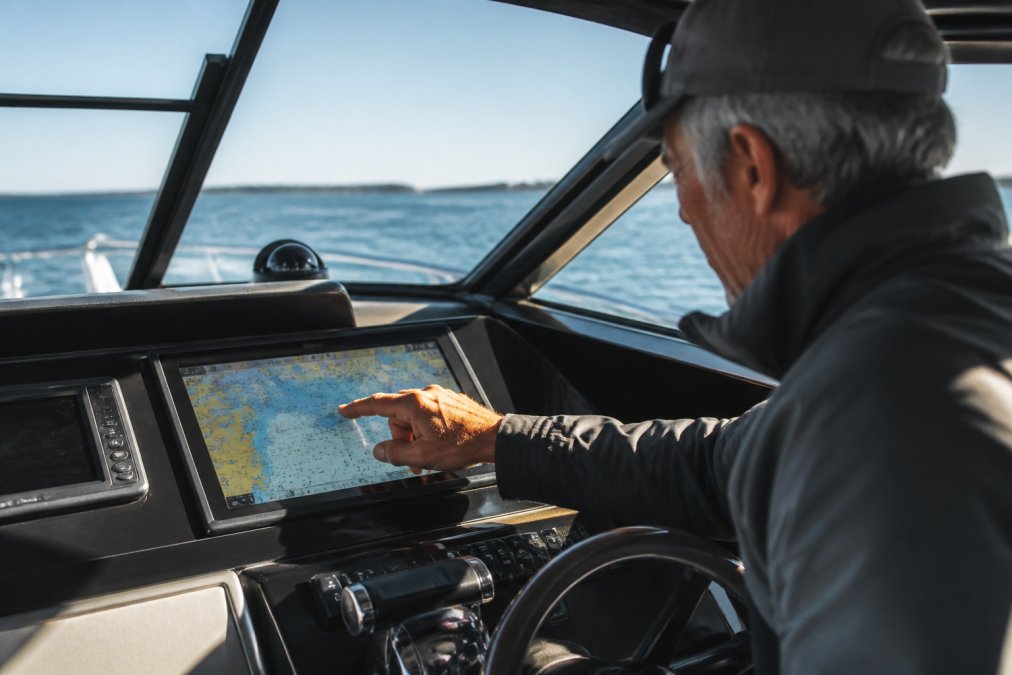
Authorized Marine Electronics Dealer Status: Why It Matters
Authorized dealer status is the single most important filter when evaluating any marine electronics online store. When a retailer is an authorized marine electronics dealer for brands like Garmin, Simrad, or Raymarine, products come through official distribution channels with full manufacturer warranties intact.
This distinction matters most when something fails. A multi-function display is a significant investment, and if it develops a fault in month eleven of a twelve-month warranty, you need the manufacturer to honor that coverage. According to Garmin's official marine warranty guidance, products must be purchased from an authorized dealer to qualify for full warranty benefits. The same principle applies across the industry, making dealer verification a non-negotiable first step.
How to Choose Marine Navigation Systems Across Brands
Choosing marine navigation systems requires matching the display, transducer, and networking capabilities to your vessel's specific needs rather than simply picking the largest screen. The core question is whether you need a standalone GPS chartplotter or a full multi-function display that integrates radar, sonar, autopilot, and engine data.
The NMEA 2000 standard allows devices from different manufacturers to share data, but not every feature translates across brands. A Simrad display may not control a Garmin autopilot with full functionality, and transducer compatibility varies by brand and model.
A common mistake is prioritizing screen size over processing power and sonar capability. The iMX8 processor in newer Simrad evo3S units delivers twice the page loading speed of earlier models, and the Garmin GPSMAP 8610xsv includes built-in support for Ultra High-Definition scanning sonar without requiring an external black box (simrad-yachting.com).
![Garmin GPSMAP 8610xsv Combo GPS/Fishfinder GN+ [010-02091-51]](https://cdn.shopify.com/s/files/1/0842/4914/9751/files/97054XL.jpg?v=1775848012)
The NMEA 2000 Network: A Practical Guide to Interoperability
Most online stores list products, but few explain how to ensure a new device will actually talk to your existing onboard network. The NMEA 2000 standard is a backbone-and-drop-cable architecture that transmits data like position, depth, and speed over a Controller Area Network (CAN) bus at 250 kilobits per second, but the implementation is not always seamless (nmea.org).
Here are the three most common interoperability failures we see when boaters buy across brands:
- Proprietary PGNs (Parameter Group Numbers): While core data like GPS position (PGN 129025) and water depth (PGN 128267) are standardized, advanced features often rely on proprietary PGNs. For instance, a Garmin chartplotter can read basic engine data from a Volvo Penta engine gateway, but it may not display all fault codes that a Volvo Penta display would. Similarly, FUSION's PartyBus audio system uses proprietary networking that won't be controlled by a non-FUSION MFD, even over NMEA 2000.
- The 'One-Way Street' of Control: NMEA 2000 allows for command and control messages, but manufacturers are cautious about letting competitors' devices control their critical systems. A Raymarine Axiom can receive and display data from a Garmin autopilot, but it cannot command it to change course. For full autopilot control, you must stay within the same brand ecosystem or use a third-party gateway like the Actisense NGW-1, which translates proprietary SeaTalkng or Garmin Marine Network data into standard NMEA 2000.
- Transducer and Sonar Data: Sonar data is rarely shared over NMEA 2000. A Simrad display cannot process the raw sonar return from a Garmin transducer. Each brand's sonar technology (e.g., Garmin's ClearVü/SideVü, Simrad's StructureScan, Raymarine's RealVision) is proprietary and requires a matching transducer. When upgrading, you are often not just buying a new display; you are buying a new transducer, which can add $300 to $1,000 to your project cost.
How to Verify Compatibility Before You Buy
Before you click 'purchase,' a reliable marine electronics online store should be able to provide a definitive answer on compatibility. If they cannot, that is a red flag. Use this practical checklist:
- Identify Your Backbone: Determine if your boat has an existing NMEA 2000 backbone and what brand's connectors it uses (e.g., Simrad/ Navico, Garmin, Raymarine). You will need the correct drop cables and T-connectors.
- Check the PGN List: Look for the manufacturer's published PGN (Parameter Group Number) list in the product manual. Cross-reference the data you need to transmit (e.g., AIS target data, wind speed/direction) against the PGNs supported by both your new display and your existing sensors.
- Ask About 'Control' vs. 'View': Ask the retailer directly: "Will this display only view data from my existing [Brand X] autopilot, or will it have full control functionality?" If control is critical, they should be able to tell you if a gateway or a same-brand display is required.
- Check for Firmware Updates: Compatibility is often fixed in software. A reliable store will check if a new firmware update for your existing sensor or the new display resolves known interoperability issues before you buy.
| Consideration | What to Check | Why It Matters |
|---|---|---|
| Networking Protocol | NMEA 2000 and Ethernet support | Determines if new gear talks to existing sensors |
| Sonar Capability | CHIRP, SideVü, DownScan support | Affects fishfinding performance and transducer needs |
| Processor Speed | Page rendering benchmarks | Impacts daily usability at the helm |
| Chart Coverage | Preloaded maps and update options | Avoids surprise cartography costs post-purchase |
| Control vs. View | PGN command support | Determines if you can control other devices or just see their data |
Marine Electronics Warranty Coverage: What to Verify Before Checkout
Marine electronics warranty coverage is not uniform across brands. Before you complete any purchase, confirm the warranty length, what it covers, and who handles the claim process. Most manufacturers offer a limited warranty covering defects in materials and workmanship but excluding damage from improper installation, misuse, or normal wear.
A reliable marine electronics online store should act as your advocate, handling return authorization and replacement logistics rather than directing you to contact the manufacturer yourself. Ask how quickly claims are processed, who pays for shipping, and whether restocking fees apply.
Firmware updates are another layer of post-purchase support that often goes overlooked. Units purchased through authorized channels typically receive these updates seamlessly, while grey-market products may not.
The Hidden 'Reliability' Metric: Post-Purchase Support and Firmware Updates
The most reliable marine electronics online store is not just the one with the best price on a chartplotter; it is the one that ensures your device remains functional and current years after the sale. A dependable source manages the entire lifecycle of the product.
Here is what separates a true partner from a mere order-taker:
- Firmware Update Management: Major brands like Garmin, Simrad, and Raymarine release firmware updates several times a year. These updates are not just for bug fixes; they often add new features, improve sonar image clarity, and update the chart rendering engine. For example, Garmin's 2024 software update for the GPSMAP 8610 series added support for the new Garmin Force Pro trolling motor, a feature that did not exist when the display was originally purchased. A reliable store will notify you of these updates, explain what they fix, and provide clear installation instructions via microSD card or Wi-Fi.
- Known Issue Disclosure: A retailer with a real service department knows the common failure points of specific models. For instance, early production runs of a particular model might have a known issue with a specific network port or a software glitch when interfacing with a certain brand of AIS transponder. A reliable store will proactively warn you about these issues or confirm that the unit you are buying has the latest factory firmware that addresses them. This is information you will never get from a faceless marketplace.
- The 'Dead on Arrival' (DOA) Protocol: Ask about the specific process for a DOA unit. The best stores have a 30-day DOA policy where they cross-ship a replacement immediately, rather than making you wait for the manufacturer's repair cycle, which can take 4-6 weeks. This is a critical question for a professional captain who cannot afford downtime.
- Extended Warranty and Support Plans: While manufacturer warranties typically cover 1-2 years, some retailers offer their own extended service plans covering labor and shipping costs beyond the standard period. These plans are only as good as the retailer's service department. Ask who actually performs the repairs: the retailer's in-house techs or a third-party depot. In-house service is almost always faster and more accountable.
A Practical Pre-Purchase Checklist for Post-Sale Support
Before you finalize any order, ask the retailer these five direct questions. Their answers will tell you more about their 'reliability' than any product review:
- What is your specific process for a dead-on-arrival unit? (Look for cross-shipping, not a return-and-wait process).
- Do you have an in-house service department for warranty repairs, or do I have to ship to the manufacturer?
- Will you notify me of future firmware updates for this specific model?
- Do you check the unit's firmware version against the latest release before shipping?
- If I have an installation question, can I call and speak to a technician who has installed this exact model?
Compare Top Multi-Function Displays for Your Vessel
The multi-function display market offers distinct strengths across brands, and the right choice depends on whether you prioritize touchscreen responsiveness, keypad reliability, or ecosystem integration. For boaters who want a fast, intuitive touchscreen experience, the Simrad NSS12 evo3S delivers a 12-inch SolarMAX IPS display with a 1 kW CHIRP-enabled sonar and dual transducer ports for $1,899.99. Its iMX8 processor makes split-screen views feel instant, and the dark-themed interface reduces glare during night passages.
![Simrad NSS12 evo3S Combo Multi-Function Chartplotter/Fishfinder - No HDMI Video Out Port [000-15403-002]](https://cdn.shopify.com/s/files/1/0842/4914/9751/files/94114XL.jpg?v=1775847624)
The Garmin GPSMAP 8610xsv at $2,999.99 is the strongest choice for mariners who want full networking capability. Its 10-inch in-plane switching touchscreen remains readable even through polarized sunglasses, and the Garmin Marine Network allows you to build a complete suite of radar, cameras, and instruments across multiple displays. Built-in SailAssist features provide race-specific data for competitive sailors. For those who prefer physical buttons over touchscreens, the Garmin GPSMAP 1042xsv offers a keypad interface with the same sonar capabilities at $1,699.99.
Raymarine takes the integration crown with the Axiom 2 Pro 12 RVM at $4,444.99, which combines chartplotter, sonar, radar, autopilot, and video into a single system running the LightHouse operating system. Its HybridTouch interface lets you switch between touchscreen and keypad control depending on conditions. Furuno appeals to serious anglers with the TZT9E at $2,195.00, which includes built-in TruEcho CHIRP sonar and CHIRP Side-Scan, plus optional radar integration with features like Target Analyzer that alert you to potential collision risks.
DIY vs. Professional Installation: Know Your Limits
DIY installation of marine electronics is feasible for surface-mounted displays and basic networking, but it requires careful planning. Map out your existing NMEA 2000 backbone, identify power sources, and confirm you have the correct cabling and connectors. Simple bracket mounts are straightforward projects most boat owners can handle in an afternoon.
The calculus changes with through-hull transducer installation, radar mounting, or integration with an existing autopilot system. A through-hull transducer requires a hole below the waterline, and getting the fairing angle wrong degrades sonar performance. Radar installation involves running cables through the mast and ensuring the scanner clears the boom's arc. These jobs carry real risk of damage to both the equipment and the vessel.
A reliable marine electronics online store should help you assess your skill level honestly. Many offer technical support for installation questions, and some provide referral networks for professional installers. Professional installation is often justified by the warranty protection it preserves, since improper installation is a common exclusion in coverage.
The Bottom Line on Buying Marine Electronics Online
Finding a reliable marine electronics online store comes down to verifying three things: authorized dealer status, transparent warranty support, and genuine expertise in system integration. When these elements are in place, your investment is protected and the gear will work on your vessel. When they are missing, you assume all the risk.
Charleston Yachting stocks premium marine electronics from industry-leading brands like Garmin, Simrad, Raymarine, and Furuno, and we back every order with same-day shipping so your project stays on schedule. We carry the gear and the knowledge to get it right.
Frequently Asked Questions
What should I look for when choosing a marine electronics online store?
Verify the store is an authorized dealer for the brands you want, like Garmin or Simrad. Check that they clearly state warranty coverage and whether they offer post-purchase technical support. Look for same-day shipping as a sign of inventory depth and operational efficiency. Specialized retailers, such as Charleston Yachting, often provide better product knowledge and support than general marketplaces.
How can I ensure my marine electronics come with a full manufacturer warranty?
Buying from an authorized marine electronics dealer is the most reliable way to secure full manufacturer warranty coverage. Authorized dealers sell genuine, new stock that hasn't been tampered with, and they handle warranty claims directly with the brand on your behalf. Purchasing from unauthorized resellers or gray market sites can leave you with no warranty support if a defect appears.
Are online marine electronics retailers authorized dealers?
Not always. Many large marketplaces and discount sites operate as unauthorized resellers, which can void your manufacturer warranty. To verify, check the retailer's website for an 'Authorized Dealer' badge or contact the brand directly to confirm. Stores like Charleston Yachting carry premium brands like Garmin, B&G, and Harken.
How do I know which marine navigation system is right for my boat?
Start by measuring the available space at your helm to determine the screen size you can accommodate, from 7-inch units up to 16-inch displays. Next, consider your primary use: fishing demands high-quality sonar, while cruising prioritizes detailed charting and autopilot integration. Finally, verify NMEA 2000 connectivity to ensure the new system will communicate with your existing sensors and instruments.
The marine electronics landscape rewards buyers who do their homework. Authorized sourcing, honest warranty terms, and compatible system design are the pillars of a purchase you will not regret. Start with a clear picture of your vessel's needs, verify the retailer's credentials, and choose equipment that can grow with you. Get started with Charleston Yachting and outfit your helm with confidence, backed by expert support and fast fulfillment.