

9 Essential Marine Hardware Items for Offshore Sailing

Last Updated: October 26, 2026
Quick Summary
Essential marine hardware for offshore sailing includes personal safety equipment, distress signaling devices, navigation and communication systems, rigging components, and spare parts. These items support preparation for challenging offshore conditions and help ensure vessel readiness for passages beyond 50 miles from shore.
- The ACR GlobalFix V6 EPIRB transmits on 406 MHz with position accuracy within 100 meters
- Offshore passages require lifejackets, EPIRB, autopilot, and redundant communication systems
- Rigging inspection intervals are annual, with replacement every 7-10 years depending on use
- Essential spare parts include rigging wire, shackles, blocks, stainless steel fasteners, and engine filters
- Lifejackets require inspection every 6 months and replacement every 5-10 years
Table of Contents
- Why Essential Marine Hardware Matters for Offshore Sailing
- Personal Safety Equipment: Lifejackets and Personal Flotation Devices
- Emergency Location and Distress Signaling: EPIRB and Survival Gear
- Communications and Navigation: VHF Radio, Compass, and Autopilot
- Sailboat Rigging Hardware: Blocks, Shackles, and Deck Fittings
- Building Your Offshore Sailing Equipment Checklist
- Offshore Sailing Spare Parts and Tools You Cannot Afford to Leave Behind
- Inspection, Maintenance, and Replacement Intervals for Offshore Hardware
- Getting Started with Charleston Yachting
- Frequently Asked Questions
Why Essential Marine Hardware Matters for Offshore Sailing
Offshore sailing demands careful equipment choices. Essential marine hardware for offshore sailing supports preparation for challenging conditions.
Offshore conditions can put equipment to the test. Lines, fittings, and communication systems are among the components sailors may consider when preparing a vessel.
This guide covers categories of marine hardware and considerations for offshore sailing.
Below, we'll cover personal safety systems, distress signaling, navigation and communications, rigging, spare parts, and maintenance considerations.
Personal Safety Equipment: Lifejackets and Personal Flotation Devices
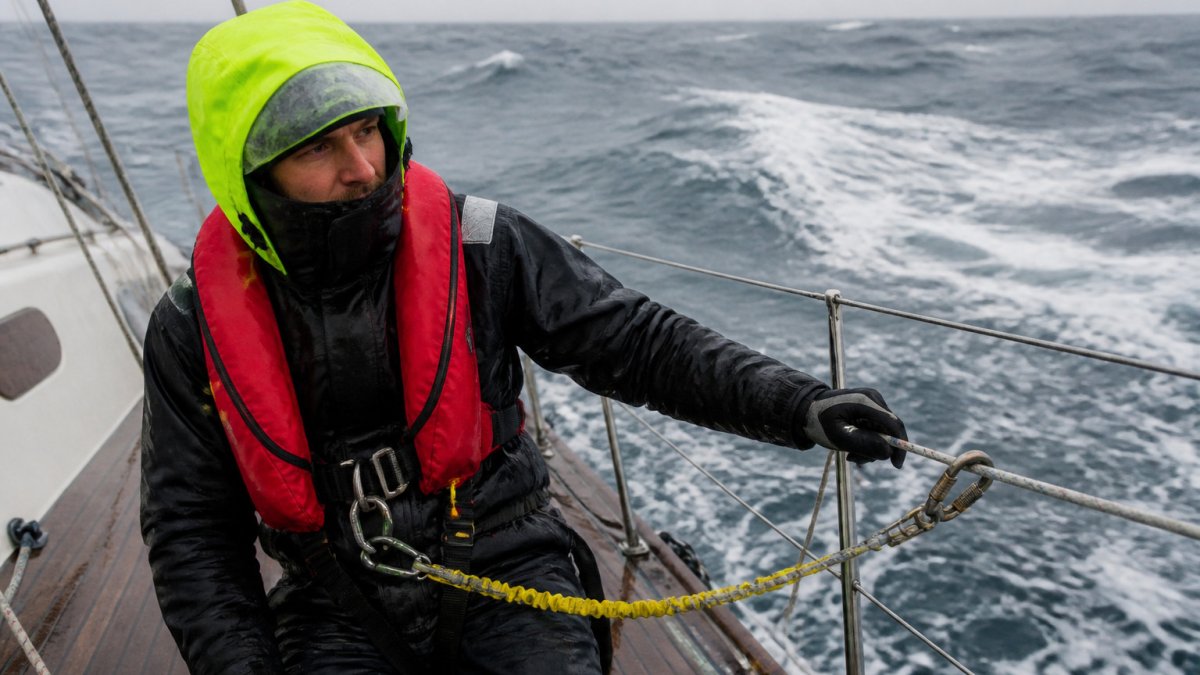
Lifejackets and personal flotation devices are among the equipment sailors may consider for offshore sailing.
The Mustang Atlas 190 DLX Open Ocean Inflatable PFD has 190N of buoyancy, an integrated spray hood, and a SOLAS-approved water-activated light.
Emergency Location and Distress Signaling: EPIRB and Survival Gear
An EPIRB, or Emergency Position-Indicating Radio Beacon, is a distress-signaling device. The ACR GlobalFix V6 listing describes its 406 MHz distress transmission and worldwide Cospas-Sarsat search-and-rescue satellite network.
The ACR GlobalFix V6 Category 2 EPIRB transmits on 406 MHz, derives position through GNSS networks, and provides position accuracy to within 100 meters. It also transmits a 121.5 MHz homing signal and features Return Link Service, which confirms that the distress message was received.
The GlobalFix V6 uses Near Field Communication to connect to a smartphone for diagnostics that demonstrate whether the battery is charged and the EPIRB is functioning correctly.
The ACR RapidDitch Bag is made of water-resistant, reflective material and floats with up to 25 pounds of gear. Its shoulder strap transforms into two 4-foot safety harnesses, and an external pocket allows access to an EPIRB. The bag can be customized with survival equipment for sailing or boating conditions.
Communications and Navigation: VHF Radio, Compass, and Autopilot
The Raymarine Ray91 Modular Dual-Station VHF system has a 25-watt transmitter, dual-station capability, and a built-in AIS Class B receiver. Its black-box design places the transceiver out of sight; the included wired handset and passive speaker provide radio control.
The Ray91 AIS receiver can share information about nearby AIS-equipped vessels, including vessel name, course, speed, and CPA, with compatible MFDs over NMEA2000 or NMEA0183. Channel scanning, dual-watch, and tri-watch are listed features.
The Ritchie B-81-WM Voyager Bracket Mount Compass has Wheelmark certification for lifeboat and rescue boat use. Its features include a 3-inch CombiDamp dial, 12V green LED lighting, and built-in compensators to adjust for deviation.
The Raymarine ST2000 Plus Tiller Pilot is listed for tiller-steered sailing vessels up to 10,000 pounds. It includes a 12V socket, tiller pins, and mounting sockets.
Sailboat Rigging Hardware: Blocks, Shackles, and Deck Fittings
Blocks, shackles, and deck fittings are among the hardware categories sailors may consider when outfitting a vessel. Learn where to buy marine rigging hardware from top retailers.
ACR GlobalFix V6 Category 2 EPIRB w/Return Link Service Mobile App [2854] →
American Boat and Yacht Council standards for marine rigging establish guidelines for hardware sizing and installation. Following these standards ensures your rigging can handle the loads it encounters.
Building Your Offshore Sailing Equipment Checklist
A checklist can help organize equipment considerations. Your checklist depends on vessel size, passage length, and crew experience.
For coastal cruising (within 50 miles of shore):
- Lifejackets for all crew
- VHF radio with DSC
- Magnetic compass
- First-aid kit
- Basic tool kit
- Spare lines and fittings
For offshore passages (50-500 miles):
- Everything above, plus:
- EPIRB
- RapidDitch Bag with emergency supplies
- Autopilot
- Radar (if budget allows)
- Redundant communication (satellite messenger or SSB radio)
- Spare rigging hardware
- Bilge pump and manual backup
- Fire extinguishers (2-3, depending on vessel size)
For open-ocean cruising (500+ miles):
- Everything above, plus:
- Professional-grade chartplotter with radar overlay
- Redundant EPIRB or personal locator beacon for each crew member
- Medical kit exceeding basic first aid
- Spare engine parts and fuel filters
- Spare propeller and shaft coupling
- Extensive electrical spares (fuses, wire, connectors)
- Rigging inspection and replacement schedule
Offshore Sailing Spare Parts and Tools You Cannot Afford to Leave Behind
Essential spare parts for offshore passages:
- Rigging wire and cable (at least 50 feet)
- Shackles (multiple sizes)
- Blocks (at least one of each size you use)
- Stainless steel fasteners (bolts, screws, washers in common sizes)
- Hose clamps (stainless steel, various sizes)
- Electrical wire and connectors
- Fuses (match your boat's electrical system)
- Engine oil and transmission fluid
- Fuel filters and oil filters
- Impeller and belt for engine cooling system
- Spare propeller and cotter pins
Essential tools: The Wichard Offshore Knife has a half-serrated blade, a safety locking blade, and a fluorescent color. It is listed at $53.51.
- Adjustable wrench
- Needle-nose pliers and slip-joint pliers
- Screwdrivers (Phillips and flathead)
- Hammer
- Hacksaw with spare blades
- Marlinspike for working with rope and fittings
- Wire cutters
- Multimeter for electrical troubleshooting
U.S. Coast Guard offshore vessel safety recommendations include guidance on spare parts and tools. Review their checklist before departure.
Inspection, Maintenance, and Replacement Intervals for Offshore Hardware
| Hardware Type | Inspection Interval | Replacement Interval | What to Check |
|---|---|---|---|
| Lifejackets | Every 6 months | Every 5-10 years | Straps, zippers, inflation mechanism |
| EPIRB | Annually | Battery at 10 years | Battery status, antenna integrity |
| VHF Radio | Every 6 months | As needed | Antenna connection, speaker function |
| Compass | Annually | 15+ years | Dial clarity, bubble integrity |
| Autopilot | Every 6 months | 10+ years | Tiller arm movement, electrical connections |
| Blocks and Shackles | Before each passage | 5-10 years depending on use | Cracks, corrosion, smooth operation |
| Cleats and Fittings | Every 6 months | 10+ years | Cracks, loose bolts, corrosion |
| Rigging Wire | Annually | 7-10 years | Broken strands, corrosion, tension |
| Stainless Steel Hardware | Every 6 months | 10-15 years | Crevice corrosion, pitting |
Maintenance best practices:
The GlobalFix V6 uses NFC to connect to a smartphone for diagnostics that demonstrate whether the battery is charged and the EPIRB is functioning correctly.
Learn more about maintaining marine safety equipment with detailed guidance on cleaning, storage, and inspection schedules.
Getting Started with Charleston Yachting
Charleston Yachting provides premium marine electronics, rigging, and sailing hardware, including products from Garmin, B&G, and Harken. The business offers same-day shipping.
Charleston Yachting's expert-curated inventory includes marine electronics, rigging, and sailing hardware. Shop All.
Frequently Asked Questions
What essential marine hardware should be checked before an offshore passage?
The ACR GlobalFix V6 listing describes NFC diagnostics that demonstrate whether its battery is charged and the EPIRB is functioning correctly. The Raymarine Ray91 listing describes a 25-watt transmitter and a built-in AIS receiver that can share information with compatible MFDs. The Raymarine ST2000 Plus is a tiller pilot, and the Ritchie B-81-WM is a bracket-mount compass.
What spare parts should you carry on an offshore sailboat?
The Wichard Offshore Knife listing describes a half-serrated blade for cutting modern ropes, including Dyneema. The ACR RapidDitch Bag listing describes a water-resistant bag with pockets, tethers, and loops for organizing safety gear.
How often should offshore sailing hardware be inspected?
The ACR GlobalFix V6 listing describes NFC diagnostics that demonstrate whether the battery is charged and the EPIRB is functioning correctly.
What is the difference between a lifejacket and a PFD for offshore sailing?
The Mustang Atlas 190 DLX Open Ocean Inflatable PFD is listed at $399.99 and has 190N of buoyancy, an integrated spray hood, a SOLAS-approved water-activated light, and ADAPT Technology (Advanced Airway Protection & Turning).
