

Do You Need to Register Marine Electronics for Warranty?

Last Updated: October 28, 2026
Quick Summary
Registration is not always mandatory, but skipping it can slow a marine electronics warranty claim even when coverage is valid. Some brands accept dealer registration at purchase, while others require online registration with the serial number and order number. Keep your proof of purchase, since the warranty period usually starts on the purchase date, not the install date.
- Most marine electronics carry one to three years of coverage depending on manufacturer and product line.
- Garmin requires completed onboard claim forms within 45 days of service completion.
- Navico Group requires receipt within six weeks of completed work under its published marine warranty policies.
- Reversed polarity during a DIY install is the most common reason a fresh claim is denied.
- Get a claim or case number from the manufacturer before shipping or repairing anything.
Table of Contents
- What a Marine Electronics Warranty Actually Covers
- When Your Marine Electronics Warranty Starts and Ends
- Marine Electronics Warranty Registration: What Manufacturers Require
- How to File a Marine Electronics Warranty Claim Step by Step
- Manufacturer Warranty Claim Letter Template
- Marine Electronics Warranty Claim Processing Time and Timelines
- Why Claims Get Denied and How to Appeal
- Replacing a Denied Unit: Choosing the Right Electronics
- Frequently Asked Questions
What a Marine Electronics Warranty Actually Covers
A marine electronics warranty is a manufacturer's written promise to repair or replace a defective unit within a set period, covering manufacturing defects and component failures, not damage you cause. According to Warranty Week's 23rd Annual Product Warranty Report, the average U.S. product warranty claims rate was 1.30% in 2025, most claims are the exception, not the rule.
Marine electronics live in salt air, vibration, and voltage swings, and manufacturers write their terms around that reality.
Covered failures generally include:
- Dead-on-arrival units and failed power boards
- Display failures not caused by impact
- Internal GPS or sonar module faults
- Software defects the manufacturer acknowledges
Covered Failures vs. Owner-Caused Damage
The line between a manufacturing defect and owner-caused damage decides most claims. A defective part fails on its own; a cracked screen from a dropped wrench or a corroded connector from a bad installation does not qualify. Research from M. Luo and coauthors' warranty claims analysis groups claim causes into software failures, hardware failures, and software-hardware interaction, exactly how manufacturers triage electronics claims.
Watch out: reversed polarity during a DIY install is the single most common reason a fresh claim is denied.
Electronics-Specific Exclusions Most Owners Miss
General boat-warranty articles stop at "exclusions apply." For electronics, exclusions are where claims actually die. These categories appear in most marine electronics warranties, though wording varies by brand and product line:
- Improper installation and integration. Wiring the unit to a circuit that exceeds the rated voltage, tapping an unfused bus, or reversing polarity typically voids coverage for the resulting failure. Manufacturers treat installation as the installer's responsibility, whether that is you or a dealer.
- Incompatible components. Connecting a chartplotter to a radar or autopilot outside the manufacturer's approved compatibility list can shift liability away from the warranty. Networked systems are especially exposed because a fault in one device can damage another through the shared bus.
- Corrosion and water intrusion. Saltwater ingress through a connector that was not sealed to the manufacturer's specification reads as an installation defect, not a product defect. The same is true for units mounted where they sit in standing water or spray beyond the product's stated IP rating.
- Lightning and electrical surges. A lightning strike, a shore-power surge, or a failed alternator regulator that sends overvoltage through the boat's electronics is almost universally excluded. Some policies cover surge damage only if a separate rider was purchased.
- Normal wear and environmental degradation. Sun-caused screen fading, UV-cracked bezels, and worn keypads are typically treated as wear items, not defects, even when the unit is within the coverage period.
What "Covered" Means in Practice
Coverage is narrower than many owners expect on the remedy side. Most marine electronics warranties promise repair or replacement at the manufacturer's discretion, not a refund, the manufacturer may repair your unit, or substitute a refurbished or equivalent model if the original is discontinued.
The warranty typically covers the unit but not removal, shipping to the service center, or reinstallation. Those costs fall to the owner unless the dealer or manufacturer agrees otherwise in writing. Budget for them when deciding whether a claim is worth pursuing.
When Your Marine Electronics Warranty Starts and Ends
The warranty period usually begins on the purchase date, not the install date, a gap that catches owners who buy in winter and splash in spring. Most marine electronics carry one to three years of coverage depending on manufacturer and product line.
Extended warranty plans exist, but read the exclusions before you pay. Many extend the hardware term while leaving the same environmental limits in place.
Marine Electronics Warranty Registration: What Manufacturers Require
Warranty registration is the manufacturer's record that you own the product, and skipping it can slow a claim even when coverage is valid. Some brands accept dealer registration at purchase; others want online registration with the serial and order number.
What you'll need on hand:
- Serial number from the unit's label
- Proof of purchase with the purchase date
- Dealer name if the unit was installed professionally
How to File a Marine Electronics Warranty Claim Step by Step
Filing a marine electronics warranty claim means contacting the manufacturer, documenting the failure, getting repair authorization, and shipping the unit to an authorized service center. Do it in that order to avoid common delays.
- Confirm coverage. Check the warranty period against your purchase date and registration.
- Contact the manufacturer. Open a ticket and get a claim or case number before touching the unit.
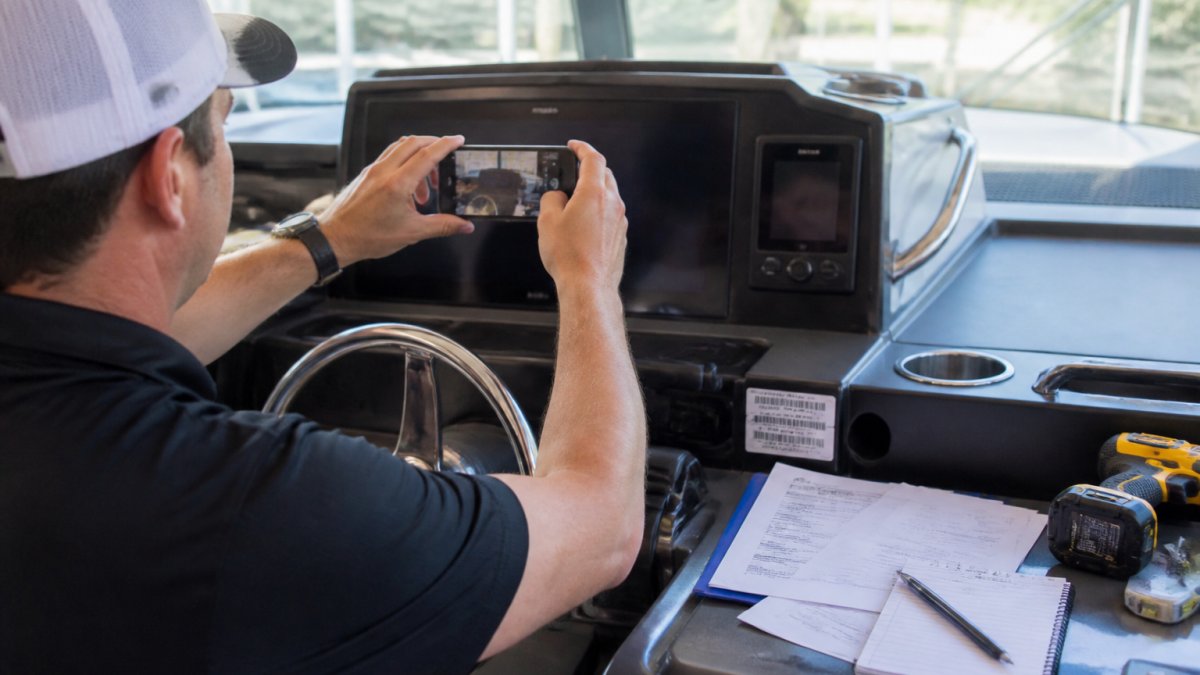
- Document the failure. Photograph the unit, the serial label, and the error on screen.
- Get repair authorization. Do not ship or repair anything until the manufacturer approves it.
- Ship safely. A unit damaged in transit can affect a claim, so pack it properly.
The Evidence Checklist for Electronics Claims
Manufacturers approve claims faster when the evidence is complete on the first submission. Build this file before you call:
- Serial number photo, legible
- Proof of purchase showing the purchase date
- Photos of the failure and the installation location
- Written description of symptoms and when they started
- Voltage readings at the unit if you have a meter
Manufacturer Warranty Claim Letter Template
A written claim letter keeps the record clean and gives the manufacturer everything it needs in one document. Copy this template and fill in the brackets.
[Your name] [Street address, city, state, ZIP] [Date]
[Manufacturer name], Warranty Claims Department
Re: Warranty claim for [product name], serial number [serial]
I purchased the above unit on [purchase date] from [dealer] under order number [order number].
Marine Electronics Warranty Claim Processing Time and Timelines
Processing time runs from a few days to several weeks, and the clock only starts once the manufacturer has your unit and complete paperwork. Submission deadlines matter more than most owners realize: Garmin requires completed onboard claim forms within 45 days of service completion, while Navico Group requires receipt within six weeks of completed work, according to their published marine warranty policies.
Expect the timeline to break down roughly like this:
| Stage | Typical Duration | What Slows It Down |
|---|---|---|
| Claim opened and reviewed | 2-5 business days | Missing serial or proof of purchase |
| Repair authorization issued | 1-2 weeks | Incomplete evidence file |
| Shipping and intake | 3-7 business days | Poor packing, carrier delay |
| Repair or replacement | 1-3 weeks | Parts backorder |
| Return shipping | 3-7 business days | Dealer delay in forwarding |
Why Claims Get Denied and How to Appeal
Most denials trace to one of four causes: expired coverage, missing registration, owner-caused damage, or an installation or environmental exclusion. Saltwater intrusion through a poorly sealed connector, for example, reads as an installation problem, not a defect. The denial letter rarely says which cause applies, and that vagueness is where most owners give up.
Read the Denial for the Actual Reason
A denial that says only "damage not covered" is not a final answer. Ask the manufacturer, in writing, for the specific warranty clause and the factual finding behind it:
Please identify the specific section of the warranty that excludes this failure and describe the inspection finding that supports the denial, including any photographs or test results the service center recorded.
Getting that documentation can help you assess an appeal.
The Escalation Ladder
Appeals can be handled as a sequence:
- Respond to the denial in writing within the manufacturer's stated appeal window. Many policies set a deadline, often 30 days from the denial notice, so check the warranty document before you draft anything.
- Re-submit the evidence file point by point. Match each denial finding to a piece of evidence that contradicts it: photos of the installation, voltage readings, the serial label, the purchase receipt, and any error logs.
- Escalate one level at a time. Start with the claims representative, then the warranty supervisor, then the manufacturer's customer relations or executive resolution team. Keep every message in the same email thread so the record is continuous.
- Bring in the dealer or installer if they are part of the chain. A dealer who sold and registered the unit may be able to assist with the claim.
- Ask for a written final decision. Once you have exhausted the manufacturer's internal process, request a written final determination. That document is what you need if you pursue the matter further.
Know What Kind of "Warranty" You Actually Have
Many denied claims aren't warranty disputes at all, they're disputes about which document applies:
- Manufacturer warranty. The written promise from the brand. It has defined terms, exclusions, and a remedy (usually repair or replacement). This is the document that governs a defect claim.
- Dealer promise. A verbal or written assurance from the seller, "we'll take care of you if anything goes wrong." It is not a manufacturer warranty, and it may not survive a change in dealership ownership. Get it in writing or treat it as goodwill, not coverage.
- Extended service contract. A separately purchased plan, often administered by a third party rather than the manufacturer. Read the exclusion section before relying on an extended service contract.
- Consumer-protection rights. Consumer-protection rules can vary by state and product. Check an official source for rules that apply to your situation.
When to Stop Appealing and Replace
Consider the coverage terms, available documentation, and costs when deciding whether to pursue an appeal. You can also review what to check in a reliable marine electronics online store.
Replacing a Denied Unit: Choosing the Right Electronics
When you replace the unit, consider the product and the manufacturer's warranty terms.
Charleston Yachting offers marine electronics from brands including Garmin and B&G, along with rigging and sailing hardware from Harken, and same-day shipping. Before you buy, check our guide to what to check in a reliable marine electronics online store. And if the fault might be fixable rather than terminal, run through common marine GPS troubleshooting steps first.
Frequently Asked Questions
Do you have to register marine electronics to qualify for a warranty?
Check the manufacturer's warranty terms to determine whether registration is required. Keep your proof of purchase and product details.
When does a marine electronics manufacturer warranty start?
Check the warranty terms for the date coverage begins.
How long does a marine electronics warranty claim take?
Check the manufacturer's current warranty policy for claim processing information and any submission deadlines.
Can a manufacturer deny a marine electronics warranty claim?
Yes. A manufacturer may deny a claim under the terms of its warranty. Review the applicable policy and keep relevant records.
What documents do you need for a marine electronics warranty claim?
Check the manufacturer's claim instructions for the documents required for your claim.
What should you do if a marine electronics warranty claim is denied?
Review the manufacturer's denial and warranty terms. If you have questions about the decision, contact the manufacturer.
Warranty paperwork is nobody's favorite part of boat ownership, but a registered product, a clean evidence file, and a seller that ships same-day turn a denial into a minor delay instead of a lost season. Charleston Yachting stocks Garmin, B&G, and Harken electronics and hardware with same-day shipping and expert-curated inventory, so you can replace a failed unit and get back on the water. Get started with Charleston Yachting and keep your helm powered.
