

Marine Wind Meter: What It Is and Why You Need One

Table of Contents
- What a Marine Wind Meter Measures
- Why Sailors Use a Marine Anemometer
- Handheld Anemometer for Sailing vs. Fixed Instruments
- Masthead Wind Sensor Installation and Location
- Wind Instrument Installation and Calibration
- Integrating Wind Data Into Your Onboard Systems
- Frequently Asked Questions
Last Updated: October 8, 2026
What a Marine Wind Meter Measures
A marine wind meter, also called an anemometer, is an instrument that measures wind speed and direction from your vessel. It's one of the most valuable tools on a sailboat because it gives you real-time data about the conditions around you. Without this information, you're sailing blind to what the wind is actually doing.
The core function is simple: the meter collects two pieces of data. Wind speed tells you how fast the air is moving. Wind direction tells you where that wind is coming from relative to your boat. Together, these readings shape every decision you make about sail trim, safety, and navigation.
Wind Speed and Direction Data
Wind speed measurement comes from the rotating cups on top of the anemometer. As wind pushes the cups, they spin faster or slower depending on wind strength. The instrument converts this rotation into a readable number, typically shown in miles per hour, knots, or kilometers per hour.
Wind direction measurement uses a pointer or vane that aligns with the wind source. This vane rotates freely and points directly into the wind. Your display shows the angle relative to your boat's heading, so you know instantly whether the wind shifted or stayed steady.
Both measurements update in real time. You see changes as they happen. This immediate feedback is why a marine anemometer is so different from checking a weather forecast, forecasts are predictions. Your onboard instrument shows what's actually happening right now.
Apparent Wind vs. True Wind
Here's where it gets important: there are two types of wind data, and they mean different things.
Apparent wind is what your boat feels. It's the combination of true wind and the wind created by your boat's movement. If you're sailing forward at 5 knots in 10 knots of true wind, the apparent wind will be stronger and come from a different angle than the actual wind direction.
True wind is the actual wind in the air, independent of your boat's motion. It's calculated from apparent wind and your boat's speed. True wind data is what you need for navigation, weather decisions, and understanding actual conditions.
Most modern marine wind instruments show both. You'll see apparent wind displayed on your helm for trim decisions. True wind data feeds into your chartplotter and autopilot for navigation. Understanding which one you're looking at prevents confusion and keeps you sailing efficiently.
Why Sailors Use a Marine Anemometer
Sailors use a marine wind meter because it transforms guesswork into precision. Without one, you're making decisions based on feel, visual cues, and experience. With one, you have objective data that confirms what you sense and catches what you miss.
The practical benefit is immediate. You sail faster, safer, and with more confidence. You catch wind shifts before they hurt your performance. You know when conditions are approaching your boat's limits. You trim sails with precision instead of approximation.
Sail Trim and Performance Optimization
Sail trim is the art of adjusting your sails to match the wind. Too tight and your sails stall. Too loose and they don't generate power. The sweet spot changes constantly as wind speed and direction shift.
A marine wind meter gives you the data to find that sweet spot. You see the exact wind angle and speed, then adjust your sails to match. Tighter wind angles need different trim than broader reaches. Stronger wind needs a flatter sail shape. Lighter wind needs a fuller shape.
Professional racing sailors live by these numbers. They watch apparent wind angle like a hawk. A 2-degree shift in wind direction triggers a trim adjustment. A 1-knot change in wind speed means reshaping the sail. This precision is why a wind instrument is standard equipment on every racing boat.
Even casual sailors benefit. You'll notice when you're sailing efficiently versus dragging. You'll understand why your boat accelerates or slows. You'll make faster, smarter decisions about when to tack or jibe. The data removes the guessing.
Safety and Navigation in Severe Conditions
Wind speed matters most when conditions get rough. Your boat has limits. Your crew has limits. Knowing the actual wind speed tells you whether you're approaching those limits.
Many sailors rely on feel. But feel is unreliable in heavy conditions. Adrenaline masks fatigue. Spray and noise distort your senses. A wind meter shows the truth. If it reads 28 knots, you know you're in strong conditions. If it climbs to 35 knots, you know you need to reduce sail or head to shelter.
This data feeds into safer navigation decisions. You can plan routes that avoid the worst wind. You know when to shorten sail before conditions force you to. You understand your boat's actual performance in real conditions, not theoretical conditions.
Weather systems move and change. A squall can arrive with little warning. Having real-time wind data means you see the wind shift before it hits hard. You have seconds to prepare instead of being caught unprepared.
Handheld Anemometer for Sailing vs. Fixed Instruments
Two main types of marine wind instruments exist: handheld meters and fixed systems mounted on your mast. Each has a place, and the choice depends on what you're doing.
When to Choose Handheld Models
A handheld anemometer is portable and affordable. You hold it up, point it into the wind, and get a reading. It's useful for checking conditions before you head out. It's useful for spot checks during a sail. It's useful for learning how to read wind.
Handheld meters are best for casual sailors, weekend trips, and situations where you need occasional data. They're also ideal if you're testing conditions at different locations on your boat. You can check wind speed at the helm, then move to the mast to see if conditions differ.
The downside is obvious: you can't steer and hold a meter at the same time. You get snapshots, not continuous data. And handheld readings are only as accurate as your technique, pointing angle matters.
When to Choose Masthead-Mounted Systems
A fixed wind instrument mounted at the masthead gives you continuous, accurate data. The sensor sits in clean, undisturbed wind. It feeds data to a display at the helm. You see wind speed and direction constantly without lifting a hand.
Fixed systems are essential for racing, long passages, and serious sailing. They integrate with your autopilot and chartplotter. They store historical data so you can analyze performance. They work in heavy conditions when handheld checks are impossible.
The trade-off is cost and installation complexity. A quality fixed system costs more than a handheld meter. Installation requires running cables and mounting hardware. But for anyone sailing regularly, the investment pays back through better performance and safety.
Raymarine RSW Wired - Smart Performance Wind Transducer - Short Arm w/30M Cable →
Charleston Yachting carries professional-grade fixed wind instruments from trusted brands like Raymarine and Garmin.
Masthead Wind Sensor Installation and Location
Where you mount your wind transducer matters. The sensor needs clean, undisturbed wind to read accurately. Placement determines data quality.
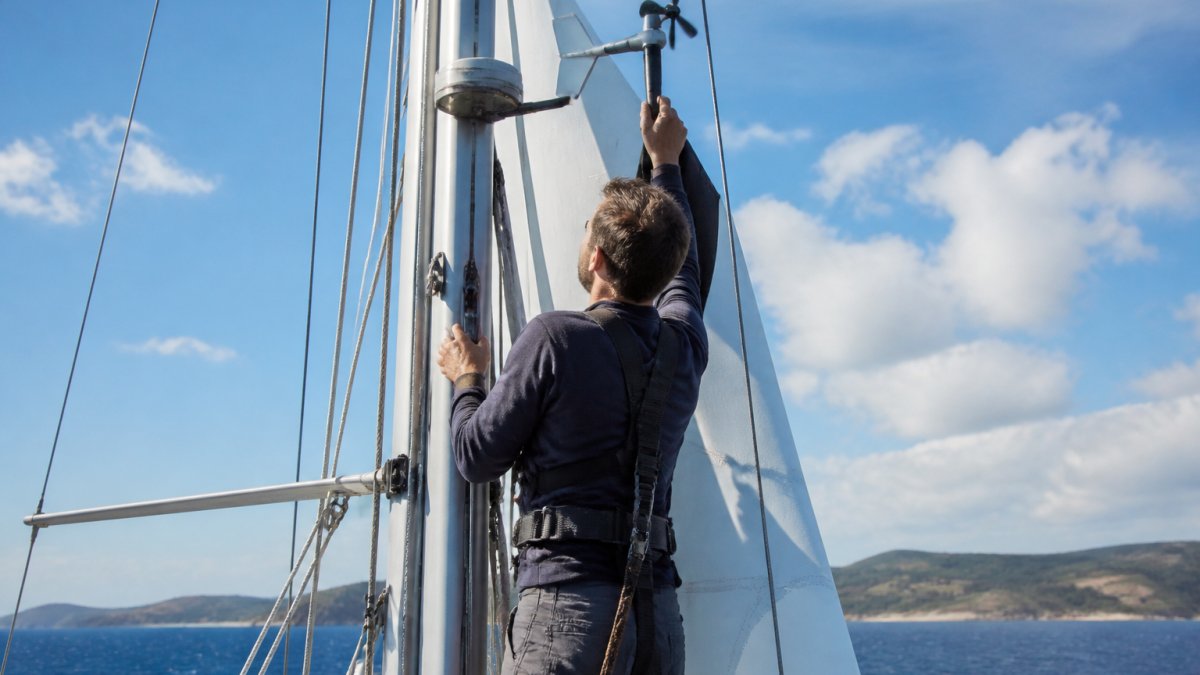
The masthead is the ideal location. It's the highest point on your boat, above the turbulence created by your sails and hull. Wind flows freely around the sensor. The data is clean and reliable.
Installation requires running a cable from the masthead down to your display at the helm. This cable carries power to the sensor and data back to your instruments. For wired systems, this is straightforward.
The sensor itself is compact and lightweight. It mounts on a bracket that attaches to your mast. Orientation matters, the vane must point freely into the wind. Once mounted, the system calibrates to your boat's heading. After that, it runs automatically.
Height above the water and clear of obstructions ensures the most accurate readings. Shadows from sails or rigging can affect wind direction data. Position the sensor where it has the clearest view of approaching wind.
Wind Instrument Installation and Calibration
Installing a wind instrument means more than just mounting hardware. You need to connect it to power, route the cable safely, and calibrate it to your boat.
Wired vs. Wireless Transducers
Wired transducers run a cable from the masthead sensor down to your display. The cable carries both power and data. This approach is reliable and proven. It requires careful routing to avoid chafe and damage. Cable runs through mast conduits or along the mast exterior, protected from UV and mechanical stress.
Wireless transducers transmit data without a cable. They're easier to install because there's no cable to route. They're ideal for retrofit installations where running cable is difficult. The trade-off is battery management, the sensor needs power, either from a small battery or from solar charging.
Both approaches work well. Wired systems are more traditional and proven. Wireless systems offer convenience. The Garmin GMI 40 Wireless Wind Pack uses wireless technology.
Accuracy, Maintenance, and Saltwater Care
Accuracy depends on sensor quality and proper installation. Professional-grade sensors like the Raymarine RSW Wired deliver consistent, calibrated data.
![Raymarine RSW Wired - Smart Performance Wind Transducer - Short Arm w/30M Cable [E70670]](https://cdn.shopify.com/s/files/1/0842/4914/9751/files/102244XL.jpg?v=1775848751)
Calibration happens after installation. You point the sensor into a known wind direction and confirm the reading matches. Most modern systems auto-calibrate once you input your boat's compass heading. After that, the system tracks wind relative to your heading automatically.
Maintenance in saltwater environments is critical. Salt spray corrodes exposed metal. UV light degrades plastics. Regular freshwater rinsing removes salt buildup. Annual inspection catches corrosion early. The Raymarine i60 Wind Display System is built with marine-grade materials.
Check connections yearly. Look for corrosion on terminals and connectors. Replace any visibly corroded components. Protect cable runs from chafe. These simple steps keep your wind instrument reliable for years.
Common maintenance mistakes include ignoring salt buildup, allowing cables to chafe, and skipping calibration checks. A few minutes of preventive care beats expensive repairs.
Integrating Wind Data Into Your Onboard Systems
Modern marine electronics work together. Your wind meter connects to your chartplotter, autopilot, and navigation systems.
Wind data feeds into autopilot systems. The autopilot uses wind angle to maintain course relative to the wind, not just magnetic heading. This is valuable when wind shifts.
Wind data also integrates with your chartplotter. Combined with your boat's position and speed, it shows your actual performance.
Many sailors log wind data for analysis. You see patterns in local wind behavior. You understand seasonal changes. You build knowledge about conditions in your sailing area.
At Charleston Yachting, we understand that integration matters. The Raymarine i50/i60 Wind, Speed, Depth System Pack includes all the transducers and displays you need for a complete integrated system.
![Raymarine i60 Wind Display System [E70061]](https://cdn.shopify.com/s/files/1/0842/4914/9751/files/46060XL.jpg?v=1775842328)
A marine wind meter transforms how you sail. It gives you objective data about the conditions around you.
The choice between handheld and fixed systems depends on how seriously you sail. Casual sailors benefit from occasional handheld checks.
Charleston Yachting carries professional-grade wind instruments from Raymarine and Garmin. These systems are built for durability in saltwater environments and designed to integrate with your existing electronics.
Frequently Asked Questions
What is a marine wind meter used for?
A marine wind meter, or anemometer, measures wind speed and direction to help sailors optimize sail trim, make informed navigation decisions, and maintain safety in changing conditions. Real-time wind data allows you to adjust sails for better performance and identify when conditions become too severe for continued sailing. Onboard wind instruments integrate with chartplotters and autopilot systems to provide comprehensive weather monitoring.
What is the difference between a handheld anemometer for sailing and a masthead wind sensor?
A handheld anemometer is portable and measures wind at your location when held up; it's ideal for quick checks and casual sailors. A masthead wind sensor stays permanently mounted at the top of your mast, continuously transmitting wind speed and direction data to onboard displays. Masthead systems provide real-time, integrated data for active sailing, while handheld models offer flexibility for those who don't need constant monitoring.
How do you maintain a marine wind instrument in a saltwater environment?
Rinse your wind transducer and sensor regularly with fresh water to remove salt spray and corrosion risk. Use marine-grade materials like stainless steel and UV-stable plastics that resist saltwater degradation. Check electrical connections annually for corrosion, and inspect the transducer arm for damage or misalignment. Professional-grade instruments like the Raymarine RSW Wired are engineered for harsh marine environments.
Is 20 mph wind strong for boating?
20 mph wind is moderate and generally manageable for most recreational sailing; experienced sailors can safely sail in these conditions with proper sail trim. However, safety depends on your vessel size, experience level, and sea state. Wind speeds above 25-30 mph create challenging conditions that require caution, and sustained winds over 35 mph warrant returning to port. A marine wind meter helps you monitor conditions continuously and make informed decisions about when to reef sails or seek shelter.