

Best Sailing Hardware Brands 2026

Table of Contents
- Top Sailing Hardware Brands for 2026: Quick Comparison
- Garmin: Marine Electronics and Navigation Leadership
- B&G: Performance-Focused Chartplotters and Autopilot Systems
- Best Marine Hardware for Saltwater: Barton Marine and Deck Solutions
- Sailboat Rigging Maintenance Checklist and Hardware Durability
- Upgrading Sailboat Deck Hardware: Selection and Installation
- Hardware Compatibility and Integration Standards
- Conclusion: Choosing the Right Sailing Hardware Brands
Last Updated: August 28, 2026
Top Sailing Hardware Brands for 2026: Quick Comparison
Choosing the right sailing hardware brands can mean the difference between a reliable vessel and one plagued by corrosion, equipment failure, and costly repairs. The best sailing hardware brands 2026 deliver marine-grade durability, seamless integration with your existing systems, and performance you can trust in saltwater conditions.
At Charleston Yachting, we stock the industry's most trusted sailing hardware brands, from Garmin's navigation systems to Barton Marine's rigging components.
Quick Picks:
- Best Overall Marine Electronics: Garmin, precision navigation and wind transducers with NMEA 2000 compatibility
- Best Integrated Autopilot System: B&G, sail-specific algorithms and optically bonded displays that eliminate fogging
- Best Deck Hardware for Saltwater: Barton Marine, anodized aluminum construction with spectro finish for superior corrosion resistance
- Best Budget Wind Indicator: Davis Instruments, sapphire bearing technology at entry-level pricing
- Best Tiller Autopilot: Raymarine, proven reliability for vessels up to 10,000 lbs displacement
| Brand | Category | Starting Price | Best For | Key Strength |
|---|---|---|---|---|
| Garmin | Navigation & Wind | $629.99 | Serious sailors needing precision | Twin-fin transducers, NMEA 2000 bridge |
| B&G | Chartplotters & Autopilots | $629.00 | Racing and cruising integration | SailSteer, RacePanel, optically bonded displays |
| Barton Marine | Rigging & Deck Hardware | $40.61 | Saltwater durability | Spectro anodized finish, load-bearing components |
| Davis Instruments | Wind Indicators | $49.99 | Budget-conscious upgrades | Sapphire jewel suspension, low maintenance |
| Raymarine | Tiller Autopilots | $749.99 | Tiller-steered vessels | Proven displacement rating, simple installation |
Garmin: Marine Electronics and Navigation Leadership
Garmin dominates marine electronics by integrating wind data, GPS, and autopilot functions into a single ecosystem. The Garmin gWind Transducer's twin-fin design delivers accurate True Wind Speed in light air. Combined with the GND 10 black box bridge, it enables Nexus Network equipment to talk to NMEA 2000 systems, solving integration problems for vessels retrofitting older systems.
![Garmin gWind Transducer w/GND 10 Black Box Bridge [010-01227-00]](https://cdn.shopify.com/s/files/1/0842/4914/9751/files/51102XL.jpg?v=1775842741)
The Garmin GNX 120 Marine Instrument delivers large, easy-to-read digits visible in direct sunlight with low power consumption for extended offshore passages. Its glass-bonded LCD avoids fogging that plagues cheaper displays. At $949.99, it's not the cheapest option, but one you won't outgrow.
The real differentiator is Garmin's ecosystem approach, their transducers, chartplotters, and autopilot integrations work together seamlessly. For cruising rather than competitive sailing, you're paying for capabilities you won't use, which holds Garmin back for some users.
B&G: Performance-Focused Chartplotters and Autopilot Systems
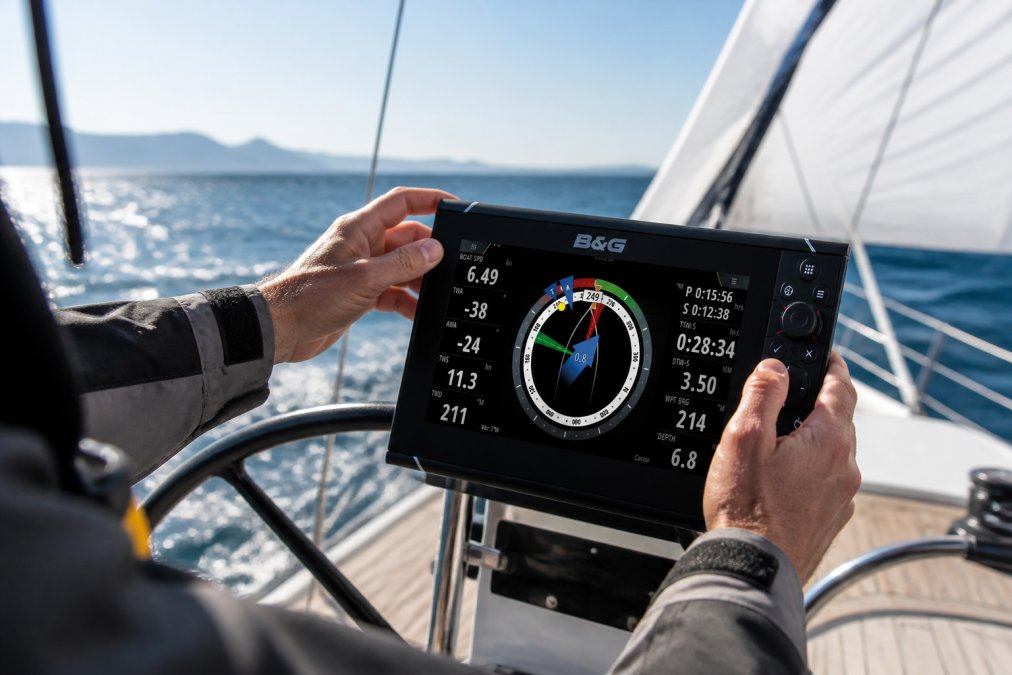
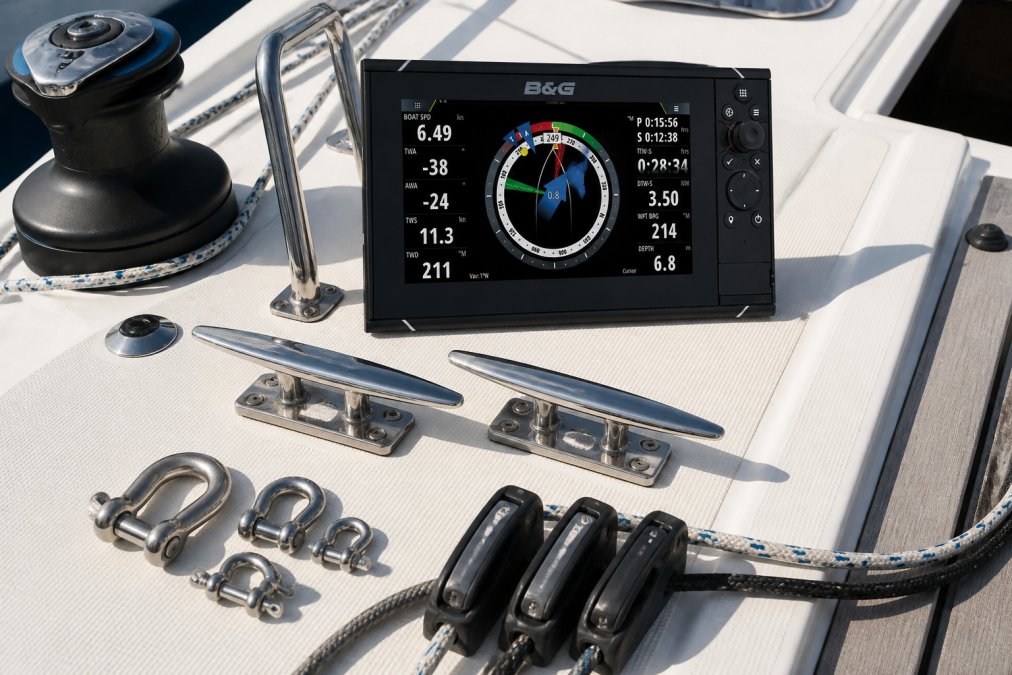
B&G owns the racing market with hardware built specifically for sailors. The Zeus 3S 9-inch chartplotter ($2,599.00) is the fastest, most responsive sailing display available. The SailSteer feature gives you true wind angle and boat-to-wind laylines in real time, critical for tactical decisions in the first 10 minutes of a race.
![BG Zeus 3S 9 - 9" Multi-Function Sailing Display [000-15408-001]](https://cdn.shopify.com/s/files/1/0842/4914/9751/files/81399XL.jpg?v=1775846073)
The Triton2 Digital Display ($629.00) represents better value for cruisers who want B&G's technology without racing features. Its optically bonded 4.1-inch screen eliminates condensation and fogging. The transflective LCD technology uses reflected ambient light during the day, then switches to LED backlighting at night, extending battery life on passages where generator runtime matters.
B&G's NMEA 2000 certification means you're adding to a proven ecosystem. The learning curve is steeper than Garmin's for casual users, but for serious sailors and racers, B&G's performance justifies the complexity.
Best Marine Hardware for Saltwater: Barton Marine and Deck Solutions
Barton Marine's 32mm Towable Genoa Car ($242.32) and End Stop & Becket Track ($96.51) represent the gold standard for saltwater rigging hardware. Their spectro anodized aluminum finish provides superior corrosion resistance compared to standard anodized finishes, critical in harsh marine environments (peer-reviewed research). The molded nylon slide inserts prevent damage to the anodized surface while ensuring smooth running after years of exposure.
The Stanchion Bullseye ($40.61) solves a specific problem: controlling furling lines without creating friction points that damage rigging. Its hard-anodized finish and through-bolted backing plate distribute loads evenly across the deck with no moving parts, meaning zero maintenance.
Barton Marine's spectro anodized finish is the key differentiator. Standard anodized aluminum degrades in saltwater within 2-3 years (astm.org). Spectro finish extends that to 7-10 years, translating to fewer replacement cycles and lower total cost of ownership.
Sailboat Rigging Maintenance Checklist and Hardware Durability
Rigging failure results from small compromises that accumulate over seasons. A structured maintenance approach catches problems before they become dangerous or expensive.
Monthly Inspection (During Sailing Season):
- Examine all cleats, shackles, and blocks for visible corrosion or white powder (aluminum oxidation)
- Check that genoa cars move freely without grinding
- Verify all bolts and fasteners are tight; corrosion can loosen stainless steel fasteners
Seasonal Deep Inspection (Every 6 Months):
- Remove and inspect stanchion hardware; clean any salt deposits with fresh water
- Test autopilot integration with navigation system; ensure NMEA 2000 connections are secure
- Check transducer mounting for cracks or loose fasteners
Annual Maintenance (Pre-Season):
- Replace sacrificial anodes on metal fittings if present
- Lubricate all moving parts with marine-grade grease
- Test all electrical connections; corrosion on NMEA 2000 connectors causes intermittent failures
Hardware durability depends on material selection and maintenance. Stainless steel resists corrosion better than mild steel but can fail unexpectedly under stress. The best approach combines quality hardware like Barton Marine's spectro-anodized components with consistent maintenance.
Upgrading Sailboat Deck Hardware: Selection and Installation
Upgrading deck hardware requires three decisions: compatibility with existing systems, load-bearing capacity for your vessel type, and whether to DIY or hire professional installation.
Compatibility Assessment: Before ordering, verify that new hardware matches your existing track systems. Most modern boats use 32mm T-track (Barton Marine's standard), but older vessels might have 25mm or proprietary systems. Measure your existing track width and check product specifications before purchasing.
Load Capacity Matching: Hardware ratings specify maximum rope diameter and load capacity. A genoa car rated for 3/8-inch line will fail if you force a 1/2-inch line through it. Check your sail plan and rigging specifications to determine the correct hardware size.
Installation Method: DIY installation works for simple hardware like bullseyes and cleats if you have basic tools. More complex work, mast-mounted transducers, autopilot actuator installation, or NMEA 2000 wiring, requires professional expertise. A rigging shop can install hardware correctly and verify electrical integration in a few hours.
Charleston Yachting stocks all the hardware you need for common upgrades with same-day shipping. For complex projects, we recommend consulting a certified rigger; professional installation is insurance against catastrophic failure.
Hardware Compatibility and Integration Standards
NMEA 2000 is the marine industry standard for connecting navigation, autopilot, and sensor systems. Understanding this standard prevents integration nightmares that plague retrofit projects.
NMEA 2000 uses a standardized data format and connector type, allowing different manufacturers' equipment to communicate on a single network (nmea.org). Garmin, B&G, Raymarine, and most professional-grade marine electronics support NMEA 2000. Older systems (pre-2010) often use NMEA 0183 (serial connections) or proprietary networks like Nexus.
The GND 10 black box bridge solves the compatibility problem for mixed systems by converting data between Nexus Network and NMEA 2000.
Common Integration Scenarios:
Upgrading a 15-year-old Garmin chartplotter: New Garmin equipment integrates directly via NMEA 2000. Installation takes 2-3 hours if you're comfortable with wiring.
Mixing Garmin and B&G systems: The GND 10 bridge enables communication between Garmin gWind transducers and B&G chartplotters. Cost: $629.99 for the transducer plus bridge.
Adding an autopilot to an older system: Raymarine's ST2000 Plus tiller pilot ($749.99) works independently and doesn't require NMEA 2000 connectivity, making it ideal for simple upgrades.
![Raymarine ST2000 Plus Tiller Pilot [A12005]](https://cdn.shopify.com/s/files/1/0842/4914/9751/files/13500XL.jpg?v=1775841196)
Conclusion: Choosing the Right Sailing Hardware Brands
The right sailing hardware brands depend on your vessel type, sailing style, and integration needs. Garmin excels in precision navigation and transducer accuracy. B&G dominates racing and integrated autopilot systems. Barton Marine delivers saltwater durability for deck hardware and rigging. Davis Instruments provides budget-conscious wind indicators. Raymarine offers straightforward tiller autopilot solutions.
The common mistake is choosing based on price alone. Cheap hardware fails prematurely, creating emergency repairs that cost far more than initial savings.
Charleston Yachting carries all these brands with same-day shipping and expert support. Whether you're upgrading navigation electronics, replacing corroded deck hardware, or integrating a new autopilot system, our team can help you select components that work together and fit your vessel's specific requirements. Shop All our sailing hardware inventory and get your upgrades in the water this season.
Frequently Asked Questions
What are the most reliable sailing hardware brands for offshore cruising?
Garmin, B&G, Raymarine, and Barton Marine are industry leaders for offshore reliability. Garmin's GNX 120 and gWind Transducer deliver accurate navigation and wind data with NMEA 2000 integration. B&G's Zeus 3S provides fast response times and sailing-specific features. Barton Marine's anodized aluminum hardware resists saltwater corrosion. Choose brands that offer stainless steel or anodized components, NMEA standards compliance, and proven offshore track records.
How do I know if sailing hardware will work together?
Check NMEA 2000 and NMEA 0183 compatibility standards. Most modern marine electronics from Garmin, B&G, and Raymarine use these protocols for seamless data sharing. Verify that your chartplotter, transducers, and autopilot support the same network standard. The Garmin gWind Transducer includes a GND 10 black box bridge that converts between Nexus and NMEA 2000 networks, solving compatibility issues between different brands.
How often should I replace my sailboat's standing rigging hardware?
Inspect deck hardware annually and replace corroded or damaged components immediately. Stainless steel and anodized aluminum hardware typically lasts 5-10 years in saltwater environments, depending on maintenance and exposure. Check cleats, shackles, and winch components for cracks, stress corrosion cracking, or load-bearing degradation. Professional riggers recommend replacing standing rigging every 10-15 years and running rigging every 5-7 years to prevent failure at sea.
Are newer marine electronics worth upgrading from older systems?
Yes, if your existing system lacks NMEA integration or shows performance lag. The B&G Zeus 3S ($2,599) offers super-fast response times and sailing-specific features like SailSteer and RacePanel that older chartplotters lack. Garmin's GNX 120 ($949.99) provides superior readability and low power consumption for extended cruising. Newer systems integrate with autopilots, transducers, and mobile apps, improving safety and navigation accuracy compared to standalone older units.
This article was written using GrandRanker