

Best Practices for Storing Sailboat Lines Properly

Last Updated: November 10, 2026
Quick Summary
Storing sailboat lines properly means cleaning them, drying them completely, and coiling them neatly in a ventilated spot out of direct sun. Unused yachting lines can last up to five years when kept clean, dry, and shielded from light and moisture.
- Rinse lines with fresh water after each sail to remove salt, sand, and grime.
- Dry lines fully, because a damp core will mildew even when the outside feels dry.
- Coil lines neatly after every outing instead of stuffing them into a locker.
- Never seal a damp coil in a plastic bag or closed locker, since trapped moisture causes mildew.
- Store lines out of direct sun, away from the bilge floor where condensation collects.
Table of Contents
- Why Storing Sailboat Lines Correctly Matters
- Dry Lines Thoroughly Before Storage
- How to Clean Sailboat Lines Before Putting Them Away
- Coiling and Hanging Lines for Storage
- Storage Options: Bags, Lockers, and Rail Hooks
- Preventing UV Damage on Marine Ropes
- When to Replace Sailboat Lines Instead of Storing Them
- Building Your Line Storage Setup
- Frequently Asked Questions
Why Storing Sailboat Lines Correctly Matters
Storing sailboat lines properly is one of the cheapest ways to extend the life of your rigging, and it takes less effort than most owners expect. Technical data from Lanex Yachting technical data on yachting line storage indicates that unused yachting lines can last up to five years when they are kept clean, dry, and shielded from light and moisture.
Most line damage does not happen on the water. It happens in the locker, on the dock, or in the bilge between seasons. A line that is stuffed wet into a closed space will mildew, stiffen, and wear unevenly long before its fibers are worn from use.
Building the storage habits below into your routine will help your lines last longer, whatever gear you ultimately buy. For broader upkeep guidance, see the complete maintenance guide for blocks and lines.
Dry Lines Thoroughly Before Storage
Moisture is the main enemy of stored line, and drying is the step owners most often rush. Guidance from Right Rope guidance on handling and maintaining boat ropes stresses that lines should be stored dry and kept out of standing water, because constant moisture promotes mildew and speeds internal wear.
A line is only dry when the core is dry. The outside of a braided line can feel dry within an hour while water remains trapped inside the braid and core. To check, bend a section of the line into a tight loop and look at the cut end of a spliced or whipped tail; a damp core will look darker and feel cool to the touch. Give the line more time than it seems to need, particularly after washing with fresh water.
Drying method matters as much as drying time. Hang lines in open air, out of direct sun and away from heat sources. Direct sun and high heat can stiffen synthetic fibers and fade protective coatings, so a shaded, breezy spot is better than a sunny dock rail. Avoid drying a line in a closed space such as a cabin or locker, where humidity stays high. Keep the line off the ground or deck, where it can pick up grime and wet from below.
Different materials dry at different speeds. Nylon absorbs more water than polyester and holds it longer, so it needs the most time before enclosed storage. Polyester sheds water quickly and dries faster. Even low-absorbency lines can hold a wet core inside a dense braid, so the core check still applies.
Watch out: coiling a line that is still damp in the core, even if the outside feels dry, is the most common way owners end up with the musty smell of a locker that was closed too soon.
How to Clean Sailboat Lines Before Putting Them Away
Salt, sand, and grime work into the braid and act as an abrasive every time the line runs through a block. Rinse lines with fresh water after each sail. For a deeper clean before winter, wash them with a mild soap and water, then rinse thoroughly.
Avoid harsh detergents, which can strip protective coatings. Once cleaned, dry the line completely before coiling, as described in the next section.
Coiling and Hanging Lines for Storage
Coil each line neatly after every outing instead of stuffing it into a locker. Loose, twisted lines tangle quickly, and a tangled line is more likely to be damaged when it is forced through a block or cleat.
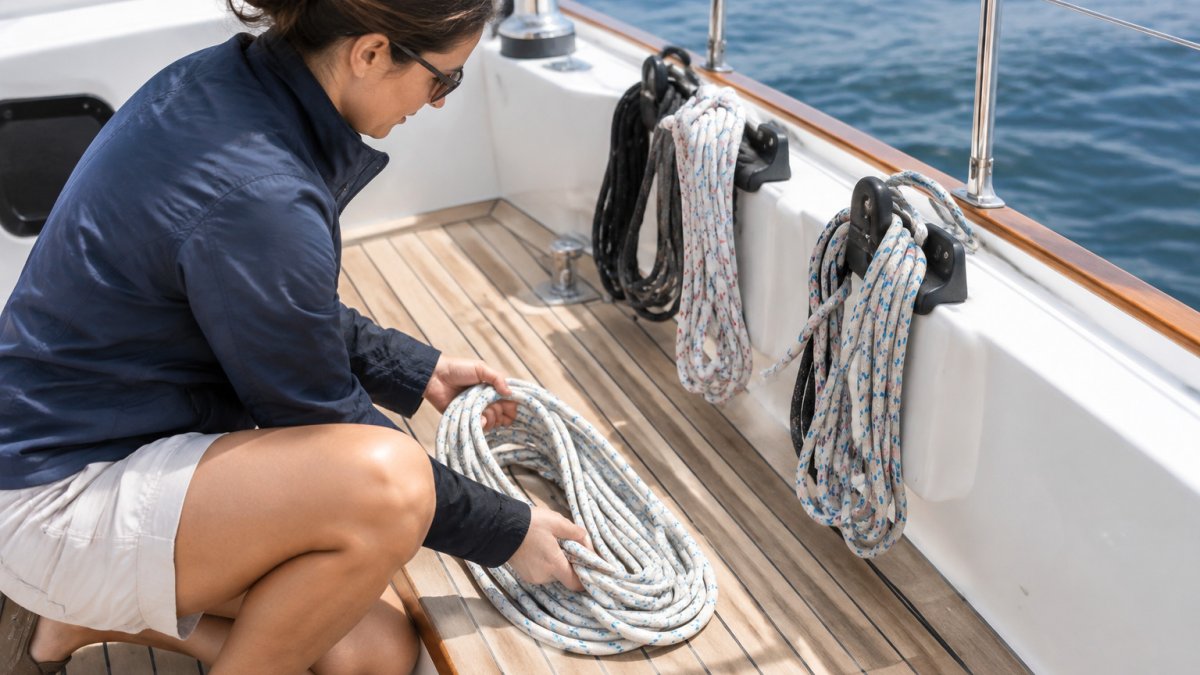
Flemish coils keep the line free of kinks and make it quick to run out again. Hang coiled lines on hooks or rail-mounted hangers so air can circulate around them. If you are also deciding which hardware to hang them from, see how to choose the best blocks for your rigging. Keep coils off the bilge floor, where condensation collects.
Watch out: never seal a damp coil inside a plastic bag or a closed locker. The trapped moisture will mildew the line faster than leaving it uncovered.
Storage Options: Bags, Lockers, and Rail Hooks
The right storage method depends mostly on one question: will this line be used in the next few weeks, or is it going into long-term stowage until the next season? Most boat owners blur these two situations, and that blurring is why lines end up mildewed in a locker or tangled on a rail.
Ready-to-use lines (dock lines, fenders' lines, sheets you touch every outing). These lines need to come out fast and go back in without a fight. Mesh bags suit this role well when they let air move around the coil while keeping it contained. Hang them in a spot where the bag is out of the bilge and away from fuel or cleaning chemicals. Rail hooks work for lines you check and adjust while under way, but they expose the line to sun and spray, so rotate those lines into a bag or locker when the boat sits for more than a few days.
Long-term or off-season stowage. For storage lasting months, the priority shifts from access to protection. Store lines in a cool, dry, ventilated locker, out of direct sun and away from the bilge floor where condensation collects. Loose coils laid flat on a shelf, or hung loosely over a hook, hold their shape better than tightly bound coils, which can set kinks that never fully come out. Before sealing a locker for winter, confirm that it has an air path, either a vent or a gap at the lid, so moisture left in the lines has somewhere to go.
Matching method to material. Polyester and nylon tolerate ordinary bagged storage well, while Lines containing Dyneema are more sensitive to long, unbroken exposure to light and heat, so a dark locker or an opaque bag is preferable to an open rail. Nylon is the most prone to stiffening when stored damp, so it deserves the most attention to drying before any kind of enclosed storage.
| Storage Option | Best For | Main Drawback |
|---|---|---|
| Mesh bag | Frequently used dock and sheet lines | Offers little UV protection |
| Cockpit locker | Protected long-term or off-season storage | Needs ventilation to prevent mildew |
| Rail hook | Active lines needing quick access | Exposed to sun, spray, and weather |
Watch out: a locker that feels dry on the day you close it can still trap moisture from lines that were stored damp. Open it and check the lines after the first week of storage.
Preventing UV Damage on Marine Ropes
Sunlight degrades synthetic fibers over time, which is why lines should be stored out of direct light. Lines left coiled on deck or hung in the open sun for long periods will weaken faster than those kept in shade.
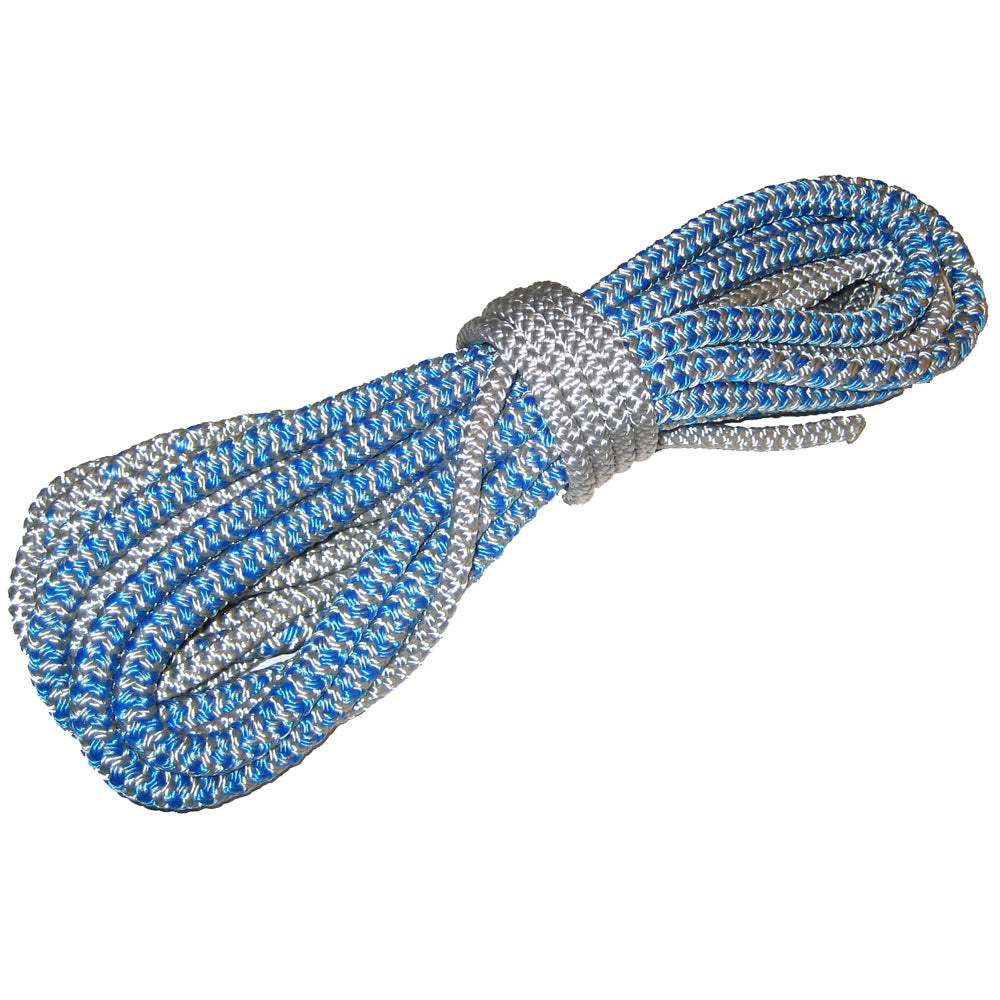
Choose line with UV-stable coatings where possible. The Robline Tapered Opti Mainsheet [MT-OPTI] is built from Dyneema with a PA/PES yarn for high loads, low stretch, and excellent grip, and the Ronstan soft shackles above use an XG coating for UV stability and resistance to abrasion.
When to Replace Sailboat Lines Instead of Storing Them
Storage cannot restore a line that is already badly worn. Check for fuzzy or glazed sections, flattened spots, soft or stiff patches, and any core that shows through the cover. If you find these signs, retire the line rather than storing it for later use.
For replacements, the Robline Tapered Opti Mainsheet [MT-OPTI] is designed for Optimist sailboat rigging and is priced at $108.63.
Building Your Line Storage Setup
Start with the lines you use most often and give them the most accessible storage. Mesh bags or rail hooks work well for dock and sheet lines, while longer or seldom-used lines can go into a ventilated locker.
Keep a simple routine: rinse after sailing, dry fully, coil neatly, store in a ventilated spot out of direct sun. Once that habit is in place, your lines will last considerably longer.
Ready to upgrade your rigging or replace worn hardware? Charleston Yachting offers same-day shipping and a curated selection of rigging and sailing hardware, so you can get the parts you need and get back on the water.
Frequently Asked Questions
Should sailboat lines be stored in the sun or shade?
Store sailboat lines in shade or in a closed locker. Ultraviolet light breaks down the outer fibers of most rope over time, and the manufacturer data for Ronstan's soft shackles use an XG coating for UV stability. Dark, ventilated storage keeps lines protected while still allowing air to dry them out. Covering exposed lines with a breathable bag or cover is a practical middle ground when lines must stay on deck.
What is the best way to prevent mildew on boat ropes?
Dry lines fully before storing them and keep them out of standing water. Constant moisture is what promotes mildew and accelerates internal wear. Rinse lines with fresh water after saltwater use, let them air dry completely, and avoid stuffing damp rope into lockers. Good airflow in the storage space matters as much as the drying step itself.
How often should you inspect your sailboat lines for wear?
Inspect lines at the start and end of each season, and check them after any heavy-load event such as a hard docking or a strong gust. Look for flattened or glazed sections, fuzzing, soft spots, and chafe near cleats and blocks. Lines that show internal wear or stiffness should be replaced, regardless of how carefully they were stored.
What are the benefits of using line bags on a sailboat?
Line bags keep coiled rope off the deck, prevent tangling, and let lines dry without being crushed. They also keep sheets and halyards accessible during sailing. Mesh bags improve airflow, which helps lines dry faster, while solid bags offer more UV protection. Choose a bag sized for the line length and make sure it drains and ventilates well.
