

How to Choose the Right Sailboat Autopilot in 7 Steps

Quick Summary
The right sailboat autopilot starts with your boat's steering type: tiller, wheel or hydraulic. Next, match the drive to your boat's displacement and rated load, then confirm the network standard, SeaTalkng or NMEA 2000, before comparing total cost.
- Confirm whether your boat is tiller-steered, wheel-steered or hydraulically steered before comparing any brand or price.
- Check the drive's rated load against your boat's loaded displacement, including fuel, water and gear.
- Raymarine Evolution systems use SeaTalkng, while Simrad NAC series work on NMEA 2000.
- Budget for drive hardware, cabling, sensors and installation labor, not just the listed package price.
- Calculate power use by separating standby load from the drive's active current draw.
Table of Contents
- Last Updated: November 11, 2026
- Start With Your Boat's Steering Type
- Sailboat Autopilot Wheel Steering: Wheel Drives Versus Tiller Pilots
- Matching Drive Type and Displacement to Your Boat
- Sailboat Autopilot System Compatibility: Components and Networks
- Best Autopilot for Sailboat Use: Cruising, Offshore and Racing
- Sailboat Autopilot for the Money: Realistic Costs and Power Use
- Shortlisting and Installing Your Autopilot This Season
- Frequently Asked Questions
Last Updated: November 11, 2026
Last Updated: November 11, 2026
Start With Your Boat's Steering Type
Choosing the right sailboat autopilot starts with one question: how does your boat get steered today? Settling this before you compare any brand or price helps, because the steering type decides which drive units will fit.
Sailboat autopilots fall into three categories: tiller pilots, wheel pilots and direct-drive pilots. Check which one your boat uses; if unsure, inspect the steering hardware at the helm and under the cockpit before shopping.
Sailboat Autopilot Wheel Steering: Wheel Drives Versus Tiller Pilots
Wheel and tiller steering call for different hardware: a tiller pilot pushes the tiller directly, while a wheel drive turns the wheel.
When a Tiller Pilot Is Enough
A tiller pilot is a good fit for smaller tiller-steered boats. It ships as a complete kit with the EV-1 Sensor Core, p70s control head, ACU-100 and a tiller drive, priced at $2,199.99. Shop the Raymarine EV-100 Tiller Evolution Autopilot to see what the kit includes.
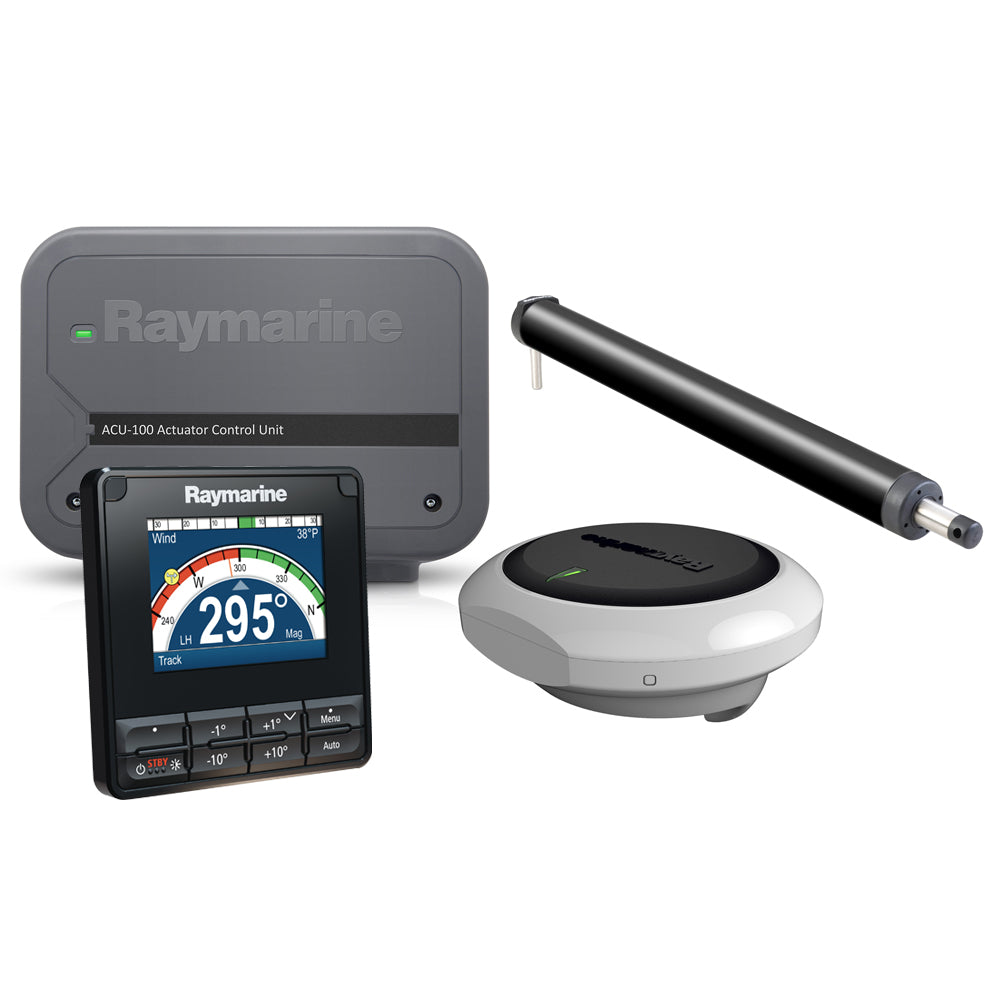
For tiller boats, Simrad's TP32 Tillerpilot at $949.99 is a lower-cost option for sailboats up to 37 ft.
Why Wheel Drives Suit Larger Boats
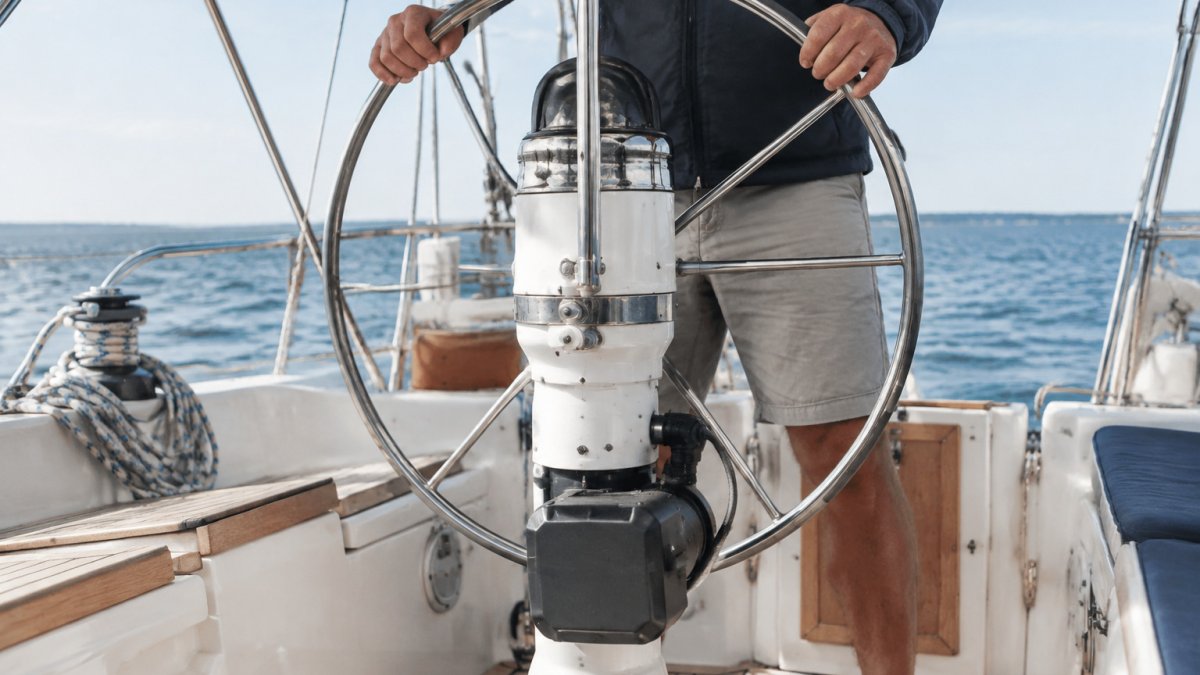
A wheel drive makes more sense on wheel-steered boats and larger vessels. The Raymarine EV-100 Wheel Evolution Autopilot is rated for boats up to 16,500 lbs (7,500 kg) and fits most types of sailboat wheels, priced at $2,199.99.
For hydraulically steered boats, the Raymarine Evolution EV-150 Hydraulic Autopilot System Pack suits small to medium hydraulic systems with a steering ram capacity between 4.9 cu. in. (80cc) and 14.0 cu. in. (230cc). It is priced at $2,099.99 and includes a Type 1 hydraulic pump, and the product listing states it is for 12-volt DC systems only. Shop the hydraulic wheel autopilot system pack to see its full contents.
Matching Drive Type and Displacement to Your Boat
Drive type and displacement work together: the drive must produce enough thrust for your rudder and steering load.
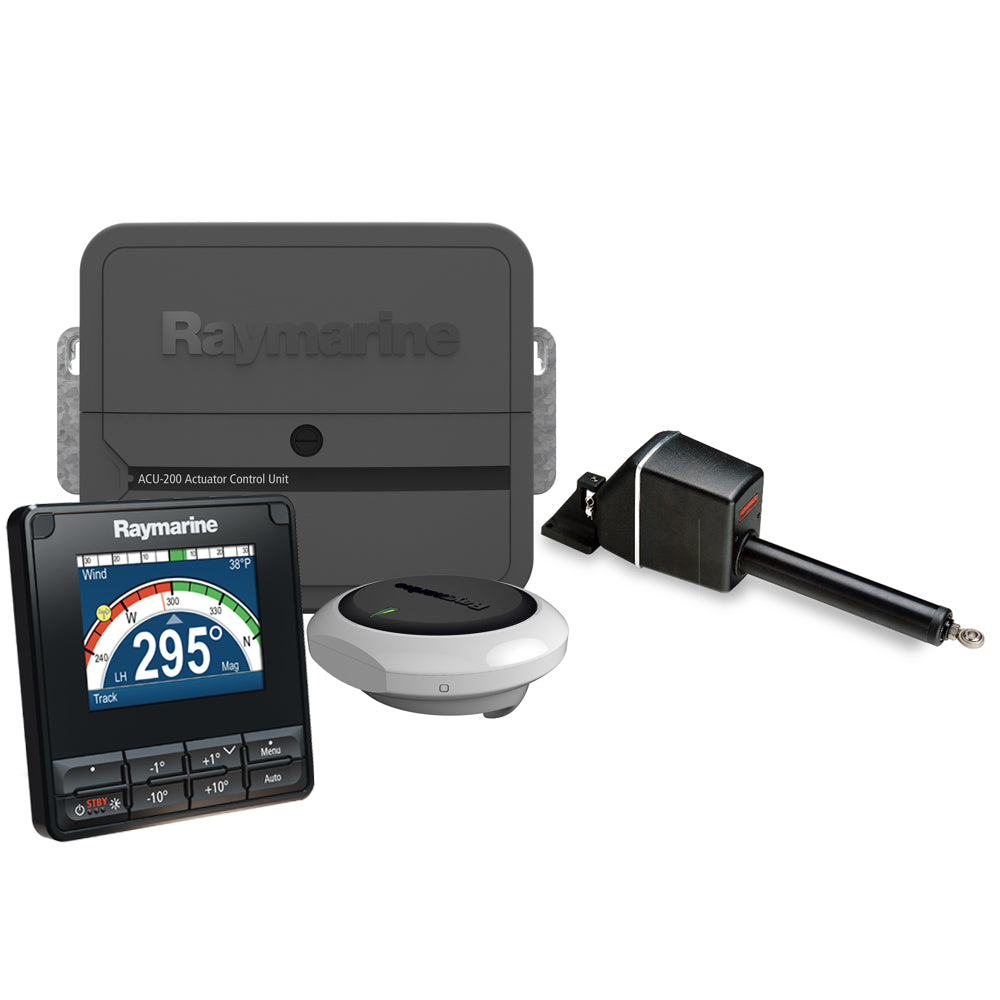
Many owners find that linear drives suit mechanically steered sailboats. The Raymarine EV-200 Sail Linear Drive Evolution Autopilot includes a Type 1 Linear Drive Unit and is priced at $4,199.99.
For heavier loads, the Raymarine EV-400 Sail Evolution Autopilot at $2,799.99 is designed for Type 2 or Type 3 drive units, with a 30 Amp output for Type 3 drives or ZF Sail Pod Drive Systems. The EV-200 Sail Evolution Autopilot at $2,499.99 works with any Type 1 linear or rotary drive unit, sold separately.
Before you buy, measure your boat's displacement and steering arrangement, then match the drive type to the rated load on the product listing.
Sailboat Autopilot System Compatibility: Components and Networks
A sailboat autopilot is a system, not a single box. Most Raymarine and Simrad packages include a control head, an actuator control unit (ACU), a sensor or compass, and a drive.
Raymarine's Evolution systems use SeaTalkng connectivity, so the control head, ACU and sensor link through one cable.
Simrad's NAC series works on NMEA 2000. The NAC-2 Autopilot Core Pack at $1,789.99 pairs an autopilot computer with a Precision-9 compass and an RF25N rudder feedback unit, and it suits vessels up to 10M (33 ft).
Best Autopilot for Sailboat Use: Cruising, Offshore and Racing
No single autopilot fits every sailing style; coastal cruising, offshore passages and racing place different demands on the system.
For a sail-focused cruiser, the Raymarine EV-400 Sail Evolution Autopilot is built for heavy-duty use, with 30 Amp output for Type 3 drives or ZF Sail Pod Drive Systems. See the full EV-400 specifications before you decide.
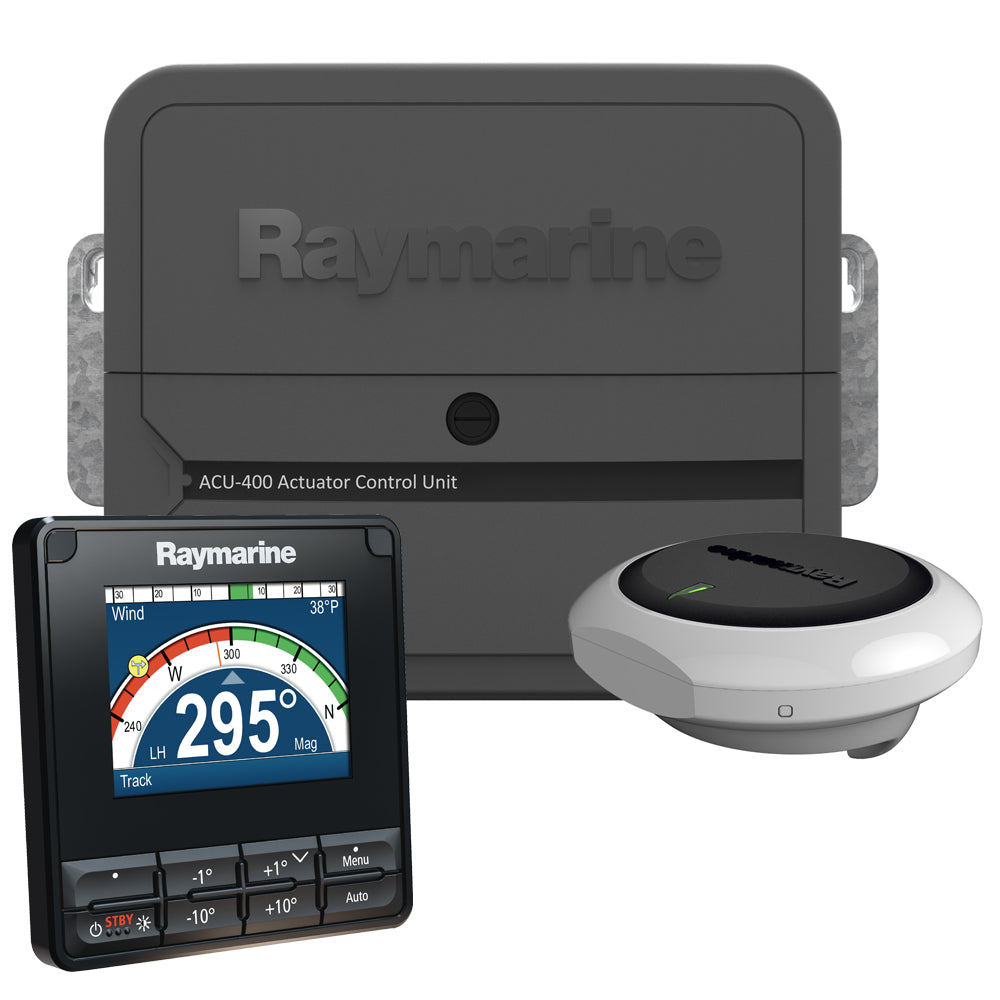
The Raymarine EV-200 Sail Evolution Autopilot at $2,499.99 is a middle option.
Simrad's TP32 Tillerpilot is designed for sailboats up to 37 ft.
Experienced sailors often find the best autopilot is the one matching their boat's steering, displacement and typical sailing.
Sailboat Autopilot for the Money: Realistic Costs and Power Use
Total cost goes beyond the sticker price. Plan for the drive unit, installation parts, cabling and any network hardware your system needs.
| Product | Steering type | Starting price | Best for |
|---|---|---|---|
| Simrad TP32 Tillerpilot | Tiller | $949.99 | Smaller coastal boats up to 37 ft |
| Raymarine EV-100 Tiller Evolution | Tiller | $2,199.99 | Tiller boats up to 13,200 lbs |
| Raymarine EV-100 Wheel Evolution | Wheel | $2,199.99 | Wheel boats up to 16,500 lbs |
| Raymarine Evolution EV-150 Hydraulic | Hydraulic | $2,099.99 | Small to medium hydraulic systems |
| Simrad NAC-2 Core Pack | Hydraulic/mechanical | $1,789.99 | Vessels up to 10M (33 ft) |
| Raymarine EV-200 Sail Evolution | Linear/rotary drive | $2,499.99 | Sailboats with Type 1 drives |
| Raymarine EV-400 Sail Evolution | Type 2/3 drive | $2,799.99 | Heavy-duty sail drives |
| Simrad NAC-3 Core Pack | Hydraulic/mechanical | $2,599.99 | Vessels 10M (33 ft) or longer |
| Raymarine EV-200 Sail Linear Drive | Linear drive | $4,199.99 | Mechanically steered vessels up to 22,000 lb |
Starting price
What the Sticker Price Leaves Out
The table above is equipment only. A realistic budget adds the parts and labor that make the system work on your boat:
- Drive and actuator hardware if the pack does not include it. The EV-200 Sail Evolution at $2,499.99 is sold without a drive; the EV-200 Sail Linear Drive bundle at $4,199.99 includes the Type 1 unit.
- Cabling and network parts. SeaTalkng power, backbone and spur cables, NMEA 2000 drop cables and tees, and any terminators your backbone needs.
- Sensors. A wind sensor for wind-hold and tack/jibe features, a rudder feedback unit if the pack omits one, and a heading sensor if you are not using the included compass.
Get a written quote listing every cable, sensor and labor hour before you commit.
Power Draw: Turning Milliamps Into Battery Runtime
Power draw matters on long passages, and the control head is only one load. Those figures describe the display, not the drive.
The drive motor is the large load, drawing current only when correcting course. Estimate runtime by separating the two:
- Standby load. Add the control head, sensor core and any network electronics. At 12V, 132mA is about 1.6W, or roughly 0.13A. Over 24 hours that is about 3.2 amp-hours, before you count the rest of the network.
- Active drive load. The drive pulls its rated current whenever the motor runs. The share of time the motor runs depends on sea state, wind angle, sail trim and how well the boat balances. Calm downwind sailing may need only occasional corrections; upwind in a seaway can keep the drive working far more often.
- Multiply and compare. Active draw times duty cycle plus standby load gives a rough daily amp-hour figure. Compare that to your house bank's usable capacity and your charging input.
On cruising boats the autopilot often becomes one of the largest continuous electrical loads after refrigeration.
Watch out: manufacturer power figures are often quoted for the control head or at nominal voltage, not for the drive under load.
Shortlisting and Installing Your Autopilot This Season
Start with your steering type, then narrow by displacement and sailing style:
- Confirm your steering type: tiller, wheel or hydraulic.
- Measure displacement and check the product's rated load.
- Confirm the network standard, SeaTalkng or NMEA 2000.
- Decide whether you need a sail-specific system or a basic coastal pilot.
- Compare the total cost, including drive and installation parts.
Compatibility Checks Before You Order
A shortlist is only useful if the parts actually connect. Run these checks before you buy:
- Steering geometry. A tiller pilot needs a clear pushrod path and a mounting point that keeps the pushrod roughly parallel to the tiller. A wheel drive needs room behind the wheel and a hub that accepts the drive's attachment. A below-deck linear or hydraulic drive needs space for the ram and a tiller arm on the rudder stock.
- Rated load versus real displacement. Compare the loaded displacement of your boat, with fuel, water and gear, to the drive's rating. A boat that sits near the top of a drive's range will work the motor harder in a seaway.
- Network standard. Raymarine's Evolution systems use SeaTalkng connectivity, so the control head, ACU and sensor link through one cable. Simrad's NAC series works on NMEA 2000. If your chartplotter and instruments use a different backbone, plan for a gateway or a separate network.
Mounting and Commissioning Walkthrough
Raymarine's Evolution systems offer flexible sensor-core mounting above or below deck, with a cabling kit including SeaTalkng power, backbone and spur cables, and Simrad's TP32 is described as simple plug-and-play. These steps apply to most systems:
- Mount the drive first. Fit the drive or pump to the steering system and check full lock-to-lock travel by hand before any power is connected. The drive must not bind or reach the end of its stroke before the rudder stops.
- Mount the compass or sensor core. Keep it away from speakers, motors, pumps and heavy current-carrying cables, and as close to the boat's center of motion as practical. A sensor mounted near a magnetic source will cause heading errors that no calibration can fix.
- Run and secure the cabling. Support cables every foot or so, keep them clear of bilge water and moving parts, and leave a service loop at each end.
- Power up and set the boat type. Most systems ask you to select vessel type and drive type during first startup. Choose sailboat and the correct drive; a wrong selection changes how the computer applies rudder.
- Calibrate the compass. Follow the manufacturer's dockside and underway calibration routine, usually a slow turn through 360 degrees in calm water. Repeat it after you stow heavy gear near the sensor.
- Set rudder limits and rudder gain. Confirm the software limits match the physical stops, then adjust gain in calm conditions before you test in a seaway.
- Sea-trial in steps. Start in calm water under power, then sail in light air, then test in the conditions you expect. Note tracking accuracy, motor noise and current draw at each stage.
Watch out: an undersized drive or a compass mounted near magnetic interference will pass dockside calibration and still steer poorly offshore. Fix mounting and sizing before tuning gain.
Failure Modes, Redundancy and Emergency Steering
An autopilot is a convenience until it fails, and then it is a steering problem. Plan for failure before you leave the dock:
- Common failure modes. Drive motor overload or blown fuse, loss of heading from a failed sensor, network dropout, and mechanical wear at the drive attachment. Most of these show up first as sluggish or wandering steering, so log any change in behavior.
- Diagnosis order. Check power and fuses first, then network connections, then the sensor, then the drive. Carry spare fuses and a spare network cable sized to your backbone.
- Redundancy. A second autopilot is rare on cruising boats, but a windvane, a tiller lock or a sheet-to-tiller arrangement gives you a backup steering method that uses no electricity. Practice engaging it before you need it.
For the next step, read the companion guide on picking the right autopilot system to finish your shortlist before you order. Charleston Yachting can help you match a system to your steering, displacement and budget, with same-day shipping on most in-stock items.
Frequently Asked Questions
Which autopilot is the best for a sailboat?
No single autopilot suits every boat. Match the system to your steering type first: the Raymarine EV-100 Tiller Evolution Autopilot at $2,199.99 is built for tiller-steered boats up to 13,200 lbs, while the EV-100 Wheel model at the same price fits most sailboat wheels on boats up to 16,500 lbs. Larger or heavier boats may need the EV-200 Sail Linear Drive at $4,199.99 or the EV-400 Sail Evolution at $2,799.99 with a Type 2 or Type 3 drive.
Is an autopilot worth it on a sailboat?
For long passages and single-handed sailing, an autopilot reduces fatigue and keeps the boat on course when you are off the helm. Coastal cruisers often use one for hours at a time. Compare the system price against how often you sail long distances. The Simrad TP32 Tillerpilot at $949.99 is designed for sailboats up to 37 ft and draws little power, which makes it a lower-cost starting point for weekend sailors.
Can a sailboat autopilot connect to a chartplotter?
Many current systems connect through SeaTalkng or NMEA 2000 networks. The Raymarine Evolution systems list SeaTalkng compatibility and connect the control head and actuator unit with a single cable for power and data. The Garmin Reactor 40 corepack pairs with a compatible Garmin chartplotter or the GHC 50 autopilot instrument. Confirm your chartplotter's network type before ordering.
How do I size an autopilot for my sailboat?
Start with your boat's steering arrangement, then check the rated capacity. Raymarine lists the EV-100 Tiller for tiller boats up to 13,200 lbs and the EV-100 Wheel for boats up to 16,500 lbs. The Simrad NAC-2 is designed for boats up to 10 m (33 ft), and the NAC-3 for 10 m and longer. Measure your boat's displacement and steering setup, and compare those figures to the listed limits before choosing.
