

NMEA 2026 Sailing Instrument System Buying Guide: Choose Right

Last Updated: November 3, 2026
Quick Summary
A sailing instrument system is a set of sensors and displays that share data over a common network, usually NMEA 2000. Choose it by first deciding what you need to measure and control, then planning the backbone and comparing complete packages, not loose parts.
- Map your needs first: depth, speed, wind, and whether you want autopilot control.
- Plan the NMEA 2000 backbone as a single line with a terminator at each end.
- Keep each drop cable as short as practical to avoid voltage drop and intermittent faults.
- The wired wind pack is priced at $1,679.00, and the wireless version at $1,784.00.
- Complete wind packs do not include a chartplotter, GPS, or autopilot, so budget for them separately.
Table of Contents
- What a Sailing Instrument System Includes
- NMEA 2000 Sailing Instruments and Network Planning
- Compare Complete Packages: Wired vs Wireless Wind
- Autopilot Options: Best Autopilot for Sailboat Use
- Sailboat Autopilot Wheel Steering: Compatibility and Setup
- Garmin Sailboat Autopilot and Mixed-Brand Integration
- Choosing Your Sailing Instrument System and Next Step
- Frequently Asked Questions
Choosing a sailing instrument system used to mean buying a chartplotter and hoping it talked to the wind and depth sensors. Today, most boats run on a shared NMEA 2000 network, and that changes how you should shop. This NMEA 2026 sailing instrument system buying guide from Charleston Yachting explains what a system includes, how the networking standards differ, and how to pick a setup that matches your boat and budget.
The core idea is simple: a sailing instrument system is a set of sensors and displays that share data over a common network. The sensors measure wind, boat speed, depth and position. The displays show that data, and in many cases an autopilot uses it to steer. Getting the pieces to work together matters more than any single component.
What a Sailing Instrument System Includes
A complete sailing instrument system typically has four layers:
- Sensors: wind transducers, a speed-through-water sensor, a depth sounder and a GPS antenna.
- Displays: multifunction displays (MFDs) or dedicated instrument screens for speed, depth, wind and heading.
- Network hardware: a backbone, drop cables and a power connection that link everything together.
- Processing and control: an optional sailing processor for advanced calculations and an autopilot computer if you want self-steering.
Not every boat needs all four layers. A cruiser may only want depth and speed. A racer will want wind data, boat-speed calibration and a display that can show start-line information. Decide what you actually need before you compare hardware.
NMEA 2000 Sailing Instruments and Network Planning
NMEA 2000 is the plug-and-play standard most modern marine instruments use. Devices share one backbone, so you can add a sensor without rewiring the boat. But "plug-and-play" only holds if the backbone is planned correctly.
A NMEA 2000 network has five physical parts you need to plan before you buy anything:
- Backbone: the main trunk cable that runs the length of the boat, typically from the helm to the mast base and aft to the engine or autopilot computer.
- Drop cables: short spurs that tee off the backbone to each device. Keep each drop as short as practical; long spurs add voltage drop and are a common source of intermittent faults.
- T-connectors: the tees that join each drop to the backbone. Every device needs its own tee, never stack multiple devices on one drop.
- Terminators: two 120-ohm resistors, one at each physical end of the backbone. Missing or extra terminators are the single most common cause of a network that won't come up.
- Power connection: a fused power tee that injects 12 V DC into the backbone, usually placed near the middle of the run.
Backbone Layout, Power, and Device Limits
Plan the backbone as a single line, not a star. NMEA 2000 is a linear bus: the two terminators must sit at the two far ends, and every device tees off between them. A star topology or a backbone that loops back on itself will cause reflection and dropped messages.
Power budgeting is the step most buyers skip. Check the load-equivalent number (LEN) listed in each device's manual, add up the devices you plan to install, and allow headroom for future sensors before you commit.
Cable length also matters. Measure the backbone and drop-cable runs before you order cable, especially on a larger vessel with a long run to the masthead and a separate run aft.
Connectors and Cross-Brand Compatibility
NMEA 2000 uses a standard five-pin connector, but manufacturers sell their own molded versions, They are electrically compatible, but the keying and gender differ, so you will usually need adapter cables at brand boundaries.
Cross-brand compatibility is real but conditional. All certified devices share the same PGN (Parameter Group Number) message set, so a display from one brand can usually read wind, depth, and speed from another brand's sensor. The failures happen at the edges: proprietary calibration data, autopilot steering commands, and some advanced sailing calculations may not cross brand lines. Before you mix brands, confirm that the specific PGNs you need, especially heading, rudder angle, and wind, are both published by the source device and accepted by the display.
Watch out: a network that powers up but drops devices intermittently is almost always a termination or power-injection problem, not a bad sensor. Check both terminators and the power tee before you replace hardware.
Compare Complete Packages: Wired vs Wireless Wind
The biggest practical choice in a wind system is wired or wireless, but the more useful question for a buyer is what a complete package actually contains. A "system pack" is not the same as a full instrument system, and the difference shows up in total cost and expansion headroom.
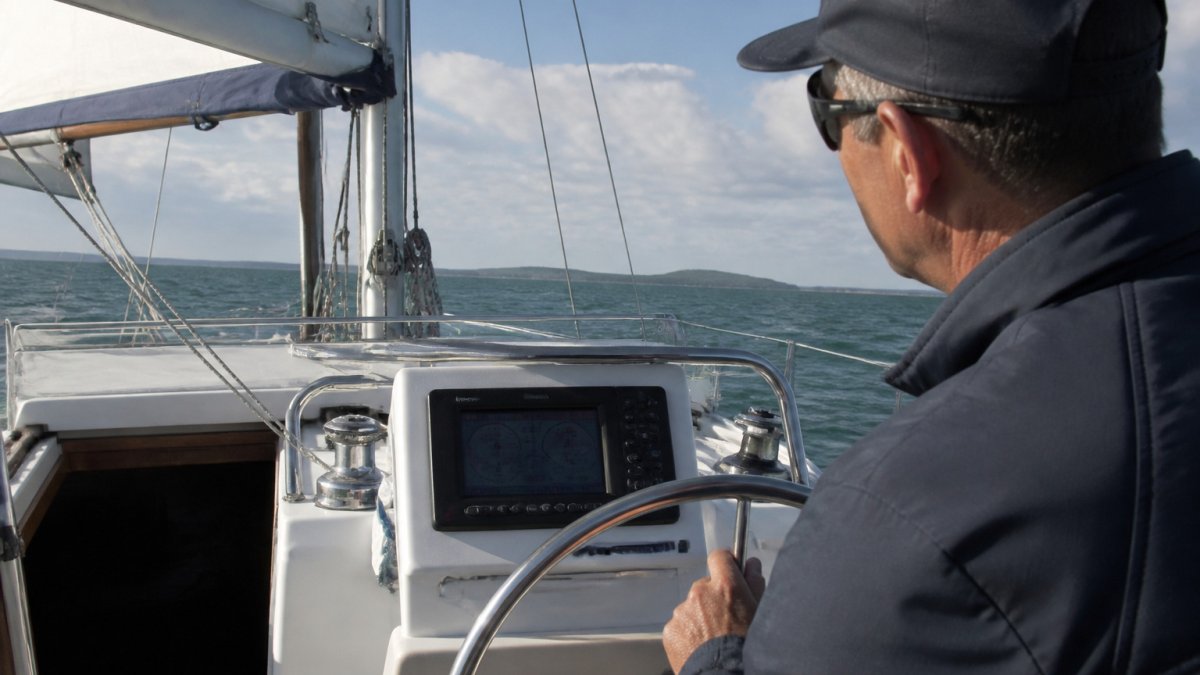
Wired wind packs connect the wind sensor through a cable run to the mast and into the NMEA 2000 backbone. They are reliable and inexpensive to run, but they require a clean cable path up the mast.
Wireless wind packs use a radio link between the masthead sensor and a receiver. They avoid the mast cable, which makes retrofits easier, but they depend on battery life and radio range.
Charleston Yachting carries both. The Triton2 Speed, Depth and Wind System Pack in its wired configuration is priced at $1,679.00, while the wireless version with the WS320 sensor is $1,784.00. The decision should rest on your mast layout and how you plan to install the system.
BG Triton Edge Sailing Processor [000-15134-001] →
What a Complete Package Actually Includes
The wired wind pack listed by Charleston Yachting includes a Triton2 4.1-inch display, a DST810 or 235 kHz depth/speed/temperature transducer, a wind sensor, and a starter backbone kit. It does not include a chartplotter, a GPS antenna, an autopilot, or a second display at the helm.
That distinction matters for budgeting. If you buy a pack expecting a full system, you will still need to add:
- A GPS source if your chartplotter does not already provide position over the network.
- A second display if you want data at both the helm and the companionway.
- An autopilot computer and drive if you want self-steering, the pack's display can control it, but the pack does not include it.
- Adapter cables if you are joining a different brand's backbone.
Installation labor for a masthead transducer and a backbone run is a variable many buyers underestimate; get a quote before you order.
Expansion and Future Cost
The wired-versus-wireless decision also shapes expansion. A wired pack leaves you a clean backbone with spare tees, so adding a second display or an autopilot later is a matter of one drop cable. A wireless pack still needs a receiver wired into the backbone, so the network side is similar, but the masthead sensor's battery becomes a maintenance item you will revisit every few seasons.
Watch out: buying the cheapest pack and then adding sensors one at a time usually costs more than buying a pack sized for your eventual system. Map your likely devices for the next three years before you choose.
The table below sets out the two wind pack options and what each package does and does not include, so you can compare them at a glance.
| Item | Value | Note |
|---|---|---|
| Wired wind pack price | $1,679.00 | Triton2 Speed, Depth and Wind System Pack |
| Wireless wind pack price | $1,784.00 | Same pack with WS320 wireless sensor |
| Wired wind connection | Cable run up the mast | Reliable, inexpensive to run |
| Wireless wind connection | Radio link to receiver | Easier retrofit, depends on battery life |
| Included display | Triton2 4.1-inch | Part of the pack |
| Not included | Chartplotter, GPS, autopilot | Must be bought separately |
Autopilot Options: Best Autopilot for Sailboat Use
An autopilot is the feature most sailors add after the instruments. The best autopilot for a sailboat is the one that steers well under sail, not just under power. Sail-specific steering algorithms matter because a sailboat heels, responds slowly to rudder input and needs to hold a course relative to the wind as well as the compass.
For buyers who want a display and autopilot control together, the B&G Triton2 Digital Display ($649.99) can be combined with a Triton2 Pilot keypad and NAC autopilot computer. It features an optically bonded 4.1-inch screen that is 100% free from condensation or fogging, and transflective LCD technology that uses reflected ambient light for day-time visibility.
Sailboat Autopilot Wheel Steering: Compatibility and Setup
Before buying, confirm your steering type, your rudder feedback, and whether your steering system is solenoid-controlled or runs on a constant-running hydraulic pump, as these determine which control unit you need. For wheel steering, the Raymarine EV DBW Evolution autopilot drive-by-wire system is built to match that setup.

A wrong match here is expensive to fix, so take the time to measure and confirm.
Garmin Sailboat Autopilot and Mixed-Brand Integration
Many buyers already own Garmin equipment and want to add B&G sensors or a different autopilot. Mixing brands is possible because all of these devices speak NMEA 2000, but compatibility is not automatic. Check which data each device publishes and which it expects to receive. A display may show depth from one brand and wind from another, yet still fail to run the autopilot if the steering data isn't shared correctly.
If you have an existing Garmin plotter, confirm its NMEA 2000 support and whether it can display wind and speed from a sensor of another brand. When in doubt, a single-brand backbone is simpler to troubleshoot, but a mixed system is workable with careful checking.
Choosing Your Sailing Instrument System and Next Step
Start with the questions that narrow the field: How many devices will the network carry? Is the mast wired or wireless-friendly? Do you need autopilot control, or are you upgrading instruments only? Answer those, then choose a package rather than assembling parts one at a time.
Write down your current equipment, your mast layout and your steering type, then compare complete packages against that list. Browse the Charleston Yachting catalog to see current instrument systems, sensors and displays, and check each product's listing for compatibility before you buy.
Frequently Asked Questions
What is the best autopilot for a sailboat?
The right autopilot depends on your boat and how you sail. For most cruising sailboats, a system that pairs a dedicated autopilot computer with a compatible display works well. B&G's Triton2 system, which includes a sail-specific steering algorithm and can be combined with a Triton2 Pilot keypad and NAC autopilot computer, is one option to compare. Match the autopilot to your steering type, whether that is a tiller, wheel, or hydraulic drive, and confirm that it works with your display before you buy.
What is the difference between NMEA 0183 and NMEA 2000?
NMEA 0183 is an older one-way serial protocol. Connecting devices often requires separate wiring for each data path. NMEA 2000 is the modern plug-and-play standard, using a shared backbone so instruments, displays, and autopilots can exchange data on one network. Older NMEA 0183 instruments cannot connect directly to an NMEA 2000 backbone without a multiplexer, so check your existing gear before buying new components.
Can Garmin and B&G instruments work together?
They can in some configurations, but compatibility depends on the specific devices and their supported data protocols. Both brands use NMEA 2000 networking, which improves the odds of integration, yet proprietary features may not carry across brands. Before purchasing, confirm that each device is NMEA 2000 certified and check the manufacturer documentation for the exact models you plan to combine.
How do I choose an autopilot for my sailboat?
Start by identifying your steering system and the sailing you do most. Cruisers often prioritize reliable course-keeping and simple controls, while racers may want sail-specific steering algorithms that respond to wind and heel. Confirm the autopilot is NMEA 2000 compatible with your display, and budget for the computer, control unit, and any sensors needed. Shop at Charleston Yachting to compare Triton2 and Triton Edge options side by side.
