

Is Harken Deck Hardware Worth the Price? A 2026 Review

Table of Contents
- What You Get for the Price: Harken Deck Hardware Under the Microscope
- Harken vs Ronstan Hardware Comparison: Where the Money Goes
- How to Choose Deck Hardware for Sailboats: A Practical Framework
- Total Cost of Ownership: Harken Blocks vs Budget Alternatives
- Where Harken Hardware Fails: Common Failure Points and How to Spot Them
- Marine Hardware Maintenance Tips for Long Service Life
- Verdict: Who Should Buy Harken Deck Hardware (and Who Shouldn't)
- Frequently Asked Questions
Last Updated: September 19, 2026
What You Get for the Price: Harken Deck Hardware Under the Microscope
Ask any experienced sailor whether Harken deck hardware is worth the price, and you'll get a divided answer. Racers tend to say yes without hesitation. Cruisers often pause. The truth sits somewhere in the engineering, not the logo. Harken earns its premium on moving parts under continuous load, and loses some ground on simple fittings where cheaper hardware performs fine.
Load Capacity and Engineering Tolerances
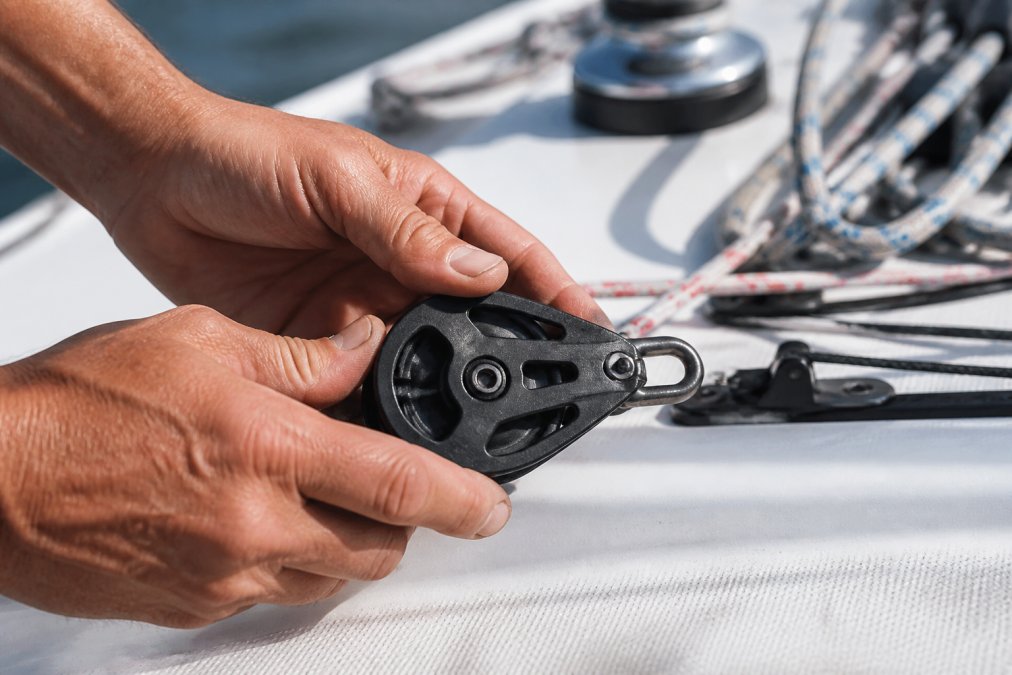
Load ratings are where Harken separates itself. A Harken 45mm Single Element Block [6230] carries a maximum working load of 1,543 lb and a breaking load of 3,086 lb, all in a 3.6 oz package. Step up to the 60mm Single Aluminum Element Block [6260] and you get 2,425 lb working load. Those numbers aren't marketing copy; they reflect tight engineering tolerances and forged construction that budget castings can't match.
![Harken 45mm Single Element Block w/Swivel [6230]](https://cdn.shopify.com/s/files/1/0842/4914/9751/files/78752XL.jpg?v=1697833467)
Bearing Systems and Friction Reduction
Bearing design decides how a line feels in your hand. Harken's Element blocks use a proven journal bearing paired with a composite sheave. That combination resists corrosion and keeps friction low over years of service. Cheaper blocks often rely on plain bushings that wear oval under load, which increases friction and shortens hardware longevity.
Harken vs Ronstan Hardware Comparison: Where the Money Goes
The Harken vs Ronstan hardware comparison usually comes down to two things: bearing quality and price-to-performance ratio. Ronstan builds solid gear, and for dinghy and light cruising applications, it's often the smarter buy. Harken pulls ahead on high-load applications where mechanical advantage and friction reduction matter most.
| Feature | Harken Element | Ronstan Equivalent | Best For |
|---|---|---|---|
| Sideplates | Forged aluminum, hardcoat-anodized | Cast or forged aluminum | Harken for corrosion resistance |
| Bearing type | Journal bearing, composite sheave | Ball bearing options available | Depends on use case |
| Price positioning | Mid-to-premium | Budget-to-mid | Ronstan for tight budgets |
| Load ratings | Higher per size | Competitive | Harken for loaded systems |
Bearing Architecture: The Real Differentiator
A journal bearing (also called a plain or sleeve bearing) relies on a low-friction composite surface between the sheave and the axle. It has no rolling elements to corrode, no balls to flatten, and no cage to fail. That's why Harken's Element blocks tolerate saltwater, grit, and long periods of static load without the notchiness that develops in ball-bearing blocks.
When Each Brand Wins
- Harken wins on offshore cruising, saltwater moorings, and any application where the block sits loaded for hours at a time. The journal bearing and hardcoat-anodized sideplates are built for that duty cycle.
- Ronstan wins on dinghies, trailer-sailers, and freshwater club racing where weight and low-load friction matter more than corrosion resistance, and where hardware is inspected and rinsed frequently.
- It's a wash on mid-size cruising boats under 35 feet with moderate loads, either brand will outlast the boat if sized correctly.
What the Price Difference Actually Buys
The premium you pay for Harken isn't a logo tax, it's the cost of tighter tolerances, forged rather than cast sideplates, and a bearing system that doesn't need to be babied. If your sailing involves saltwater, sustained load, or infrequent maintenance, that premium pays for itself. If your sailing involves a freshwater lake, a trailer, and a rinse bucket, the premium buys durability you'll never stress.
How to Choose Deck Hardware for Sailboats: A Practical Framework
Choosing deck hardware for sailboats starts with three numbers: line diameter, working load, and available deck space. Get those right and the brand decision becomes easier. Get them wrong and even premium hardware underperforms.
Matching Sheave Diameter to Line Size and Load
Sheave diameter must match your line size. A 45mm sheave handles up to 12mm (1/2 inch) line; a 60mm sheave takes up to 14mm (9/16 inch). Undersized sheaves increase friction and wear the line faster. Oversized sheaves add weight and cost without benefit.
Retrofitting New Blocks onto an Older Deck Layout
Retrofitting is where sailors get stuck. Older decks often use non-standard mounting patterns, so check shackle pin size and mounting hole spacing before ordering. A 6mm shackle pin fits most mid-size blocks, but verify against your existing fittings. If you're replacing a worn block, measure the old one first; matching dimensions saves a return.
Total Cost of Ownership: Harken Blocks vs Budget Alternatives
Total cost of ownership tells a different story than sticker price. A budget block that costs a third as much but needs replacing every few seasons can cost more over a decade than a Harken block that lasts fifteen years. The math favors Harken when you factor in labor, downtime, and the risk of hardware failure under load.
The Four Cost Buckets
A true TCO comparison for deck hardware has four inputs:
- Purchase price, the number on the tag.
- Replacement interval, how many seasons the block survives before it needs to come off.
- Labor and downtime, the cost of removing, sourcing, and reinstalling a block, plus any sailing days lost.
- Failure cost, the downside risk if a block fails under load, including line damage, sail damage, and safety exposure.
A Ten-Year Model for a Mid-Size Cruiser
Consider a 32-foot cruising boat with six blocks in the mainsheet, vang, and traveler systems. Assume the boat is sailed 30 days a year in saltwater and rinsed occasionally.
- Budget blocks: Cast-sideplate blocks with plain bushings in this duty cycle can develop sheave wobble or visible groove wear within three to five seasons. Over ten years, that's two to three replacement cycles. Each cycle means six new blocks, plus the labor to swap them, plus the risk of a mid-season failure.
- Harken Element blocks: The forged sideplates and composite bearing sheaves are commonly reported to last a decade or more in the same duty cycle with basic rinsing. One purchase, one installation.
Where the Math Flips the Other Way
TCO doesn't always favor Harken. Three cases where budget hardware wins on total cost:
- Freshwater daysailing with light loads. Corrosion is the main killer of budget blocks, and freshwater doesn't drive it. A lightly loaded block on a lake may last as long as a Harken block.
- Boats nearing the end of their ownership cycle. If you plan to sell in two seasons, you won't capture the longevity benefit.
- Non-structural fittings. Deck organizers, fairleads, and simple eye straps don't see the same continuous load as blocks. The engineering premium buys less here.
Resale and the Boat-Buyer Signal
Harken hardware on a used boat is a recognizable signal to buyers that the previous owner didn't cut corners on running rigging. It won't add thousands to the asking price, but it can remove an objection during survey and negotiation. That's a soft TCO benefit that's hard to quantify.
The Maintenance Variable
TCO assumes you maintain what you buy. A Harken block that never gets rinsed will fail sooner than a budget block that does. Freshwater rinsing after saltwater outings, a pre-sail visual inspection, and prompt replacement of any block showing sheave wobble are the habits that make the longevity argument real rather than theoretical.
Where Harken Hardware Fails: Common Failure Points and How to Spot Them
Harken hardware doesn't fail often, but when it does, the pattern is predictable. Sheave wear from undersized line is the most common issue. Bearing contamination from lack of rinsing is second. Both are preventable with basic marine hardware maintenance.
Watch for these warning signs:
- Sheave wobble or side-to-side play
- Visible flat spots on the sheave groove
- Grinding or roughness when spinning the sheave
- Corrosion pitting on sideplates or shackle pins
- Cracks near mounting holes
Marine Hardware Maintenance Tips for Long Service Life
Marine hardware maintenance tips that actually extend life come down to three habits: rinse, inspect, and lubricate sparingly. Freshwater rinsing after every saltwater outing removes the salt that drives corrosion. A visual inspection before each sail catches wear early. Light lubrication on bearing surfaces keeps friction low without attracting grit.
A simple seasonal checklist:
- Rinse all blocks and winches with fresh water
- Spin each sheave and listen for grinding
- Check shackle pins for wear and corrosion
- Inspect line for chafe at block entry points
- Replace any block showing sheave wobble
Verdict: Who Should Buy Harken Deck Hardware (and Who Shouldn't)
Buy Harken if you sail in saltwater, load your hardware hard, or want to replace blocks once rather than every few seasons. The Harken 45mm Double Element Block [6238] and 60mm Double Aluminum Element Block [6269] are the standout values in the line, offering high load capacity at a price well below Harken's top-tier gear.
![Harken 45mm Double Element Block w/Swivel [6238]](https://cdn.shopify.com/s/files/1/0842/4914/9751/files/78754XL.jpg?v=1697833484)
Frequently Asked Questions
Why is Harken deck hardware so expensive?
The price reflects engineering tolerances, materials, and load testing. Harken's Element blocks use forged aluminum sideplates and hardcoat-anodized finishes that resist corrosion, paired with composite bearing sheaves. A 45mm single Element block costs $48.05 and carries a 700 kg (1,543 lb) maximum working load with a 1,400 kg (3,086 lb) breaking load. You are paying for verified load ratings and consistent manufacturing, not just a brand name.
Is Harken better than Ronstan for sailboat blocks?
Both brands make quality hardware, but they target different priorities. Harken's Element line offers a lower entry price than their previous budget blocks while maintaining high load ratings. Ronstan often competes on weight savings for racing applications. For cruising reliability and corrosion resistance, Harken's hardcoat-anodized sideplates and composite sheaves hold up well. The right choice depends on whether you prioritize regatta performance or long-term durability on a cruising boat.
How long does Harken deck hardware typically last?
Service life depends on maintenance and exposure. The composite bearing sheaves and hardcoat-anodized sideplates resist corrosion, which extends lifespan in saltwater environments. Regular freshwater rinsing and inspection of shackle pins and sheave surfaces can keep blocks functional for many seasons. Harken hardware is designed for long service life, but UV exposure, line abrasion, and lack of maintenance will shorten it regardless of brand.
What makes Harken blocks different from budget alternatives?
Budget blocks often use lower-grade materials and less precise tolerances. Harken's Element design pairs the minimum metal needed to protect the sheave with a proven journal bearing. This means size for size, you get a lighter block with verified load ratings. For example, the 60mm single Element block handles 1,100 kg (2,425 lb) working load at $67.45. Budget alternatives may not publish breaking loads or use corrosion-resistant finishes.
Are Harken deck organizers worth the upgrade?
If your current deck layout has friction points or line handling issues, upgrading to Harken deck organizers can reduce effort and improve rigging efficiency. They are particularly valuable for shorthanded sailing where line handling needs to be smooth. However, if your existing organizers are functional and lines run freely, the upgrade may not deliver noticeable gains. Assess your deck layout and friction points before spending.
Choosing deck hardware is really a question of how hard you'll push it and how long you expect it to last. Charleston Yachting stocks the Harken Element line alongside trusted brands like Garmin and B&G, with same-day shipping so you're not waiting on the water. Browse our full rigging and hardware selection and get the components that match your boat and your sailing. Shop All.